Battery backup for a Wi-Fi router: the smallest unit that keeps the internet on, with the hours worked out
A router draws about 30 W by its adapter rating, so a 288 Wh unit is a working day and a 1 kWh unit a weekend. Five UPS-capable picks, sized from the label.
Runtime table
How long a battery runs a Wi-Fi router (power adapter rating)
30 W running
| Usable battery | 1 kWh | 2 kWh | 4 kWh | 8 kWh |
|---|---|---|---|---|
| Router at 30 W | 28.3 h | 2.4 days | 4.7 days | 9.4 days |
The math: hours = usable Wh × 85% inverter efficiency ÷ (30 W × duty cycle). Columns are usable watt-hours, after the maker's depth-of-discharge limit. Netgear Nighthawk RAX50 data sheet: 12 V at 2.5 A power adapter. The adapter rating is a ceiling; most routers idle well under it. A cable modem adds its own adapter, typically another 12 V supply, so read its label and add the two. Fiber ONTs and mesh satellites are separate adapters again. Wattage source: spec sheet.
This appliance is already ticked in the sizing calculator: add the rest of your house →
The router is the appliance an outage takes first and the one people miss most, and it is also the easiest to back up, because it draws almost nothing. A router’s power adapter is rated about 30 W, so a 288 Wh unit is a working day and a 1 kWh unit is a long weekend, and any of the five picks switches to battery fast enough that the router never reboots. The runtime table above is the arithmetic at the adapter rating; real draw is lower, so the hours are a floor.
Size it from the adapter, then add the modem
Routers do not print a wattage. The power adapter does: Netgear’s Nighthawk RAX50 ships with a 12 V, 2.5 A supply, which is the 30 W the table uses, and the watt-hours guide has the amps-times-volts conversion for yours. A rating is a ceiling. A router idling with a few devices attached draws a third to a half of it, which is why an 8-hour table figure is often a 16-hour night. The modem is a second adapter with its own label, usually another 12 V supply, and a fiber terminal or a mesh satellite is a third. Add the labels, or tick the router in the sizing calculator and add the rest as your own rows.
The switchover is the specification that matters
A router that loses power for a quarter of a second reboots, and a reboot is a minute of no internet plus whatever the modem does next. So the number that decides this purchase is not capacity, it is the UPS switchover time, and four of the five picks state 10 ms or better, the fifth 20 ms. Both are inside what a typical router supply’s capacitors ride through, per the pass-through and UPS guide, and the way to use any of them is the same: the unit stays plugged into the wall, the router and modem plug into the unit, and the battery only works when the grid does not.
That standing arrangement has a cost the spec sheet prints in small type: standby draw. Bluetti states 4.5 W for the Elite 30 V2, which is about 3 kWh a month left in UPS mode, a small standing cost that is the price of never having to think about it.
When the router is not the only thing on the list
At 30 W the router is a rounding error next to a refrigerator, which is why the two 1 kWh picks are here: about 870 to 900 Wh usable covers a router for days or a router and the refrigerator overnight, and the refrigerator page ranks that job on its own terms. Above that, the essentials list on the 3-day plan puts phones, router and a lamp at about 600 Wh a day together, a figure that any pick here covers for a night and the 1 kWh units for three. The other small load in the house, the garage door opener, is the opposite case: about 4 Wh a cycle but a motor start that rules the 288 Wh units out, per the garage door page.
What we left out
DJI’s Power 1000 V2 and Jackery’s Explorer 500 v2 are both buyable and well reviewed and both sit as honorable mentions, because neither maker’s page could be read on the check date and this site prints nothing it cannot source. Bluetti’s AC70 and EcoFlow’s RIVER 3 base model were unavailable at Amazon. No maker in the lineup states a UL 2743 listing for a portable power pack; Anker’s C1000 is the one that states standards by number, and the certification guide explains what each covers.
How we measure
Every pick is scored on the same five criteria. Every capacity, output and certification figure is read from the manufacturer's current spec sheet at write time and dated on the card, and every runtime is computed from those figures with the arithmetic shown. When a maker does not publish a number, the card says "not stated". We never guess one.
-
Usable capacity
The advertised watt-hours against what reaches the outlet: inverter loss, the depth-of-discharge limit and idle self-consumption. We state usable capacity, not the sticker.
-
Output headroom
Continuous and surge watts against the appliances readers actually plug in. A pump that pulls 3 to 5 times its running watts at start trips an underspecced inverter; we check the surge number first.
-
Chemistry and certification
LiFePO4 versus NMC, the rated cycles to 80%, and whether the unit carries UL 2743, UL 9540 or UL 1973. We print the certification status plainly and never treat an uncertified import as equivalent.
-
Recharge and expansion
Wall recharge time, the solar input ceiling and what it means for real charge time, pass-through or UPS switchover, and whether there is an expansion-battery path.
-
Value and warranty
Price per usable kilowatt-hour, weighted by warranty years. A maker that guarantees its cycle rating in writing is telling you something the spec sheet cannot.
Price bands, relative to the picks on this page: $ budget · $$ mid-range · $$$ premium · $$$$ top shelf. Retailer prices move constantly, so we show bands rather than dollar amounts; each button shows the live price.
Best overall
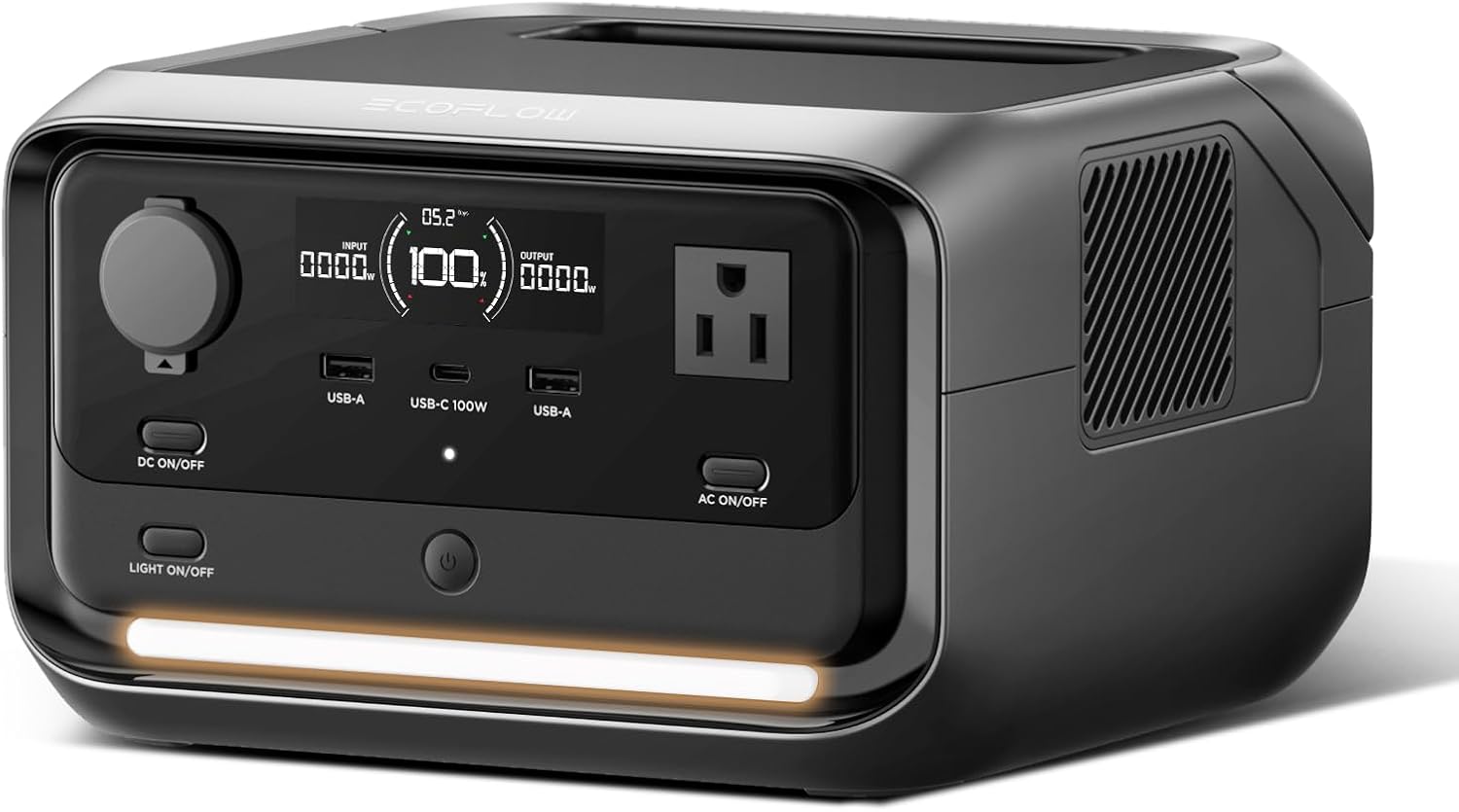
EcoFlow RIVER 3 Plus
- Advertised
- 286 Wh
- Usable, est. 85% inverter
- 243 Wh
- Continuous
- 600 W
- Surge
- 1,200 W
- Chemistry
- LiFePO4
- Rated cycles
- 3,000 to 80%
- Weight
- 10.4 lb
About 243 Wh usable, a sub-10 ms UPS switchover and a 30 dB noise figure in a 10.4 lb box that lives under the desk plugged into the wall: about 8 hours of a router at its adapter rating, and a full day at a realistic draw. EcoFlow's extra battery takes it to 858 Wh when the outage runs long.
Pros
- Under 10 ms UPS, quiet, and expandable to 858 Wh
- Budget band of the lineup
Cons
- No safety listing stated on the maker's page
Best value
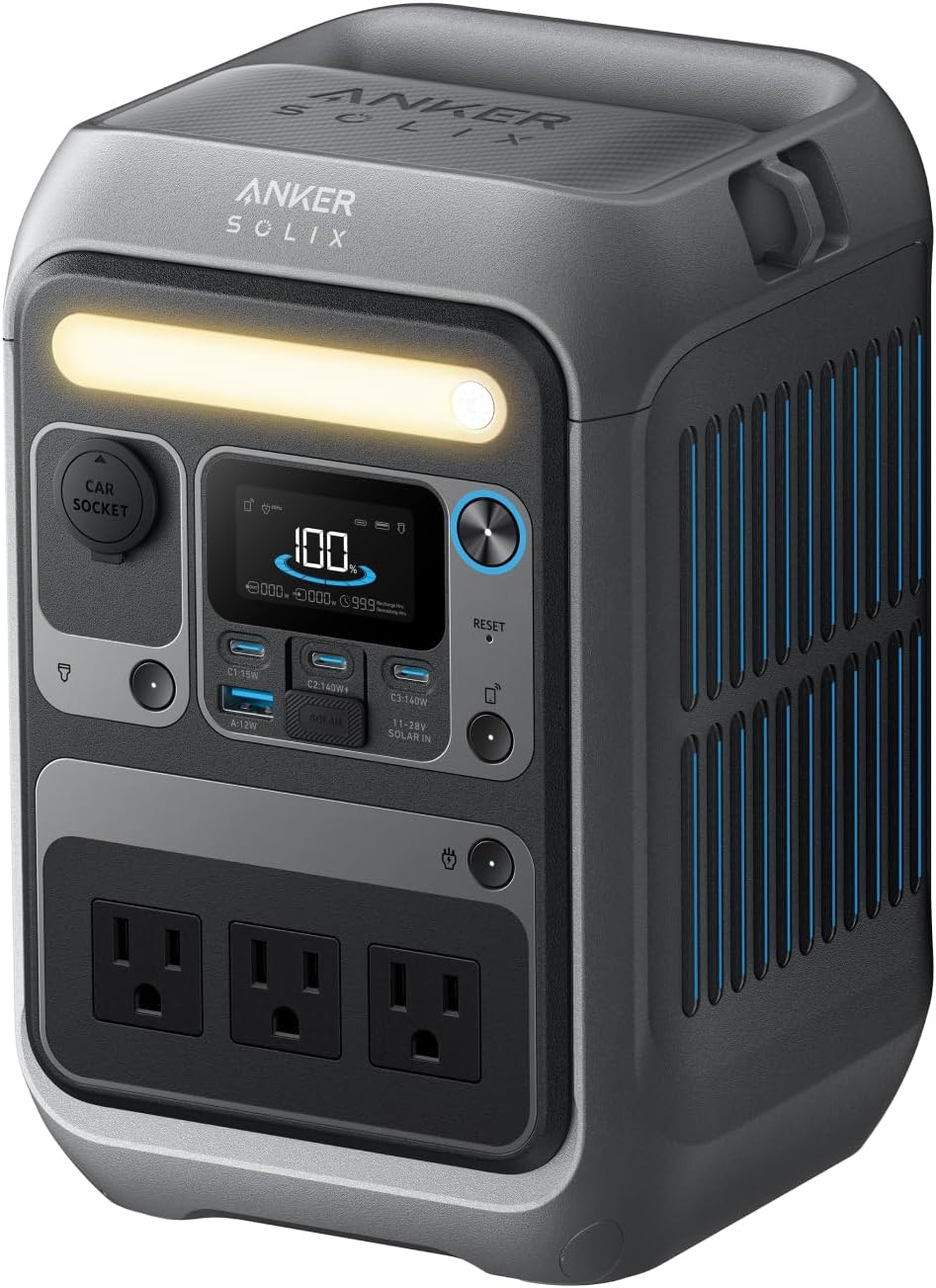
Anker SOLIX C300
- Advertised
- 288 Wh
- Usable, est. 85% inverter
- 245 Wh
- Continuous
- 300 W
- Surge
- not stated
- Chemistry
- LiFePO4 (LFP)
- Rated cycles
- not stated
- Weight
- not stated
The same 288 Wh class with three AC outlets, a 10 ms UPS mode and 140 W USB-C for the laptop that goes with the router. Anker markets a 600 W SurgePad figure, a boost mode rather than a motor surge rating, and states no weight or cycle count on its page, so those cells read not stated.
Pros
- 10 ms UPS mode; USB-C runs a laptop alongside
- Most-reviewed unit here
Cons
- Weight, cycles and surge not stated by the maker
Lightest
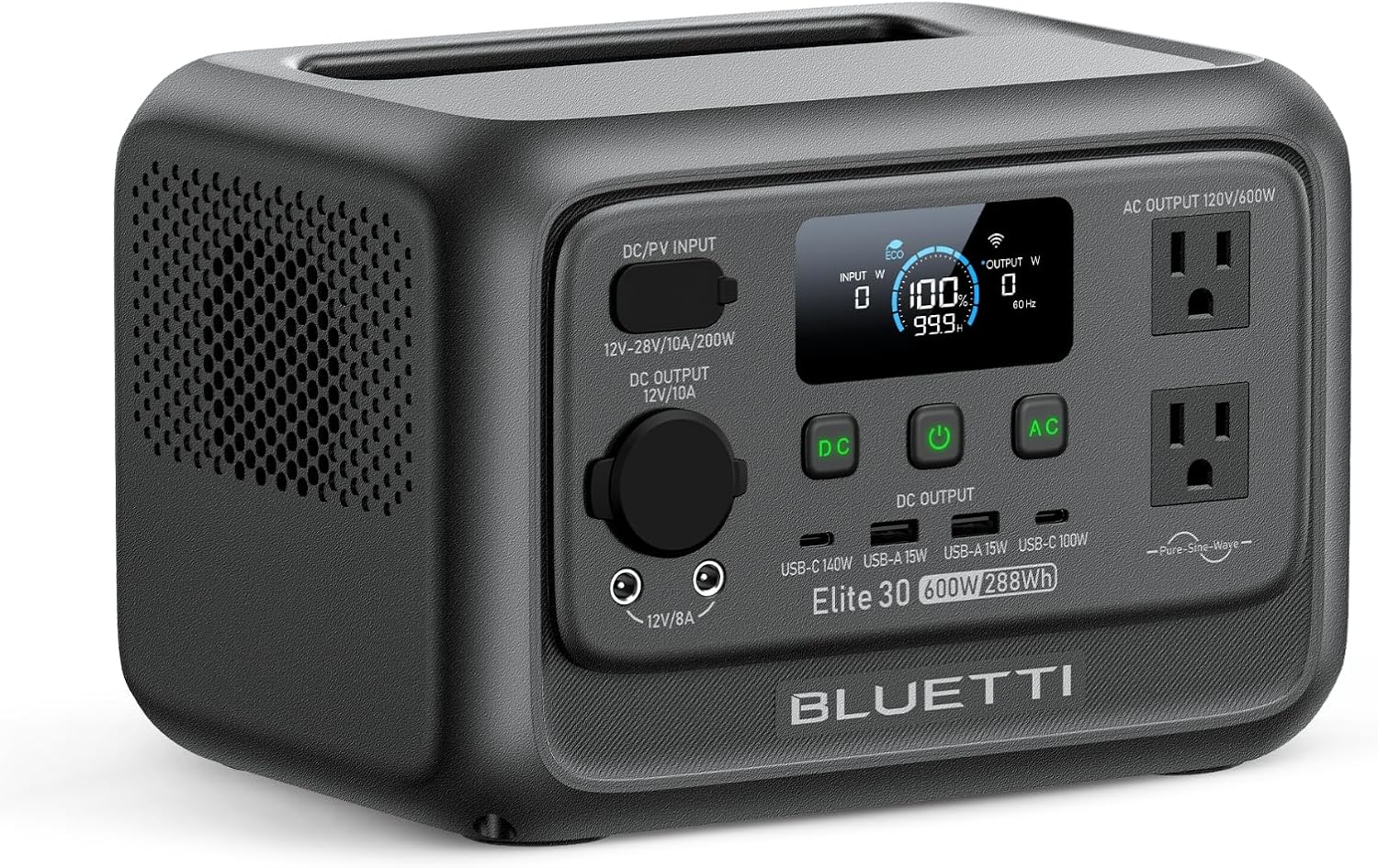
BLUETTI Elite 30 V2
- Advertised
- 288 Wh
- Usable, est. 85% inverter
- 245 Wh
- Continuous
- 600 W
- Surge
- not stated
- Chemistry
- LiFePO4
- Rated cycles
- not stated
- Weight
- 9.5 lb
Bluetti's 288 Wh unit at 9.5 lb with a 600 W inverter, a 10 ms UPS, 140 W USB-C and a 200 W solar ceiling. Bluetti states 3,000-plus cycles without a capacity basis and a 1,500 W Power Lifting figure for heating loads rather than a motor surge, so both cells read not stated. The 4.5 W standby figure on its page is worth knowing: a unit left in UPS mode for a month spends about 3 kWh idling.
Pros
- 9.5 lb; 600 W inverter in the 288 Wh class
- 10 ms UPS; 200 W solar input
Cons
- Cycle basis and surge not stated by the maker
Best 1 kWh, certified
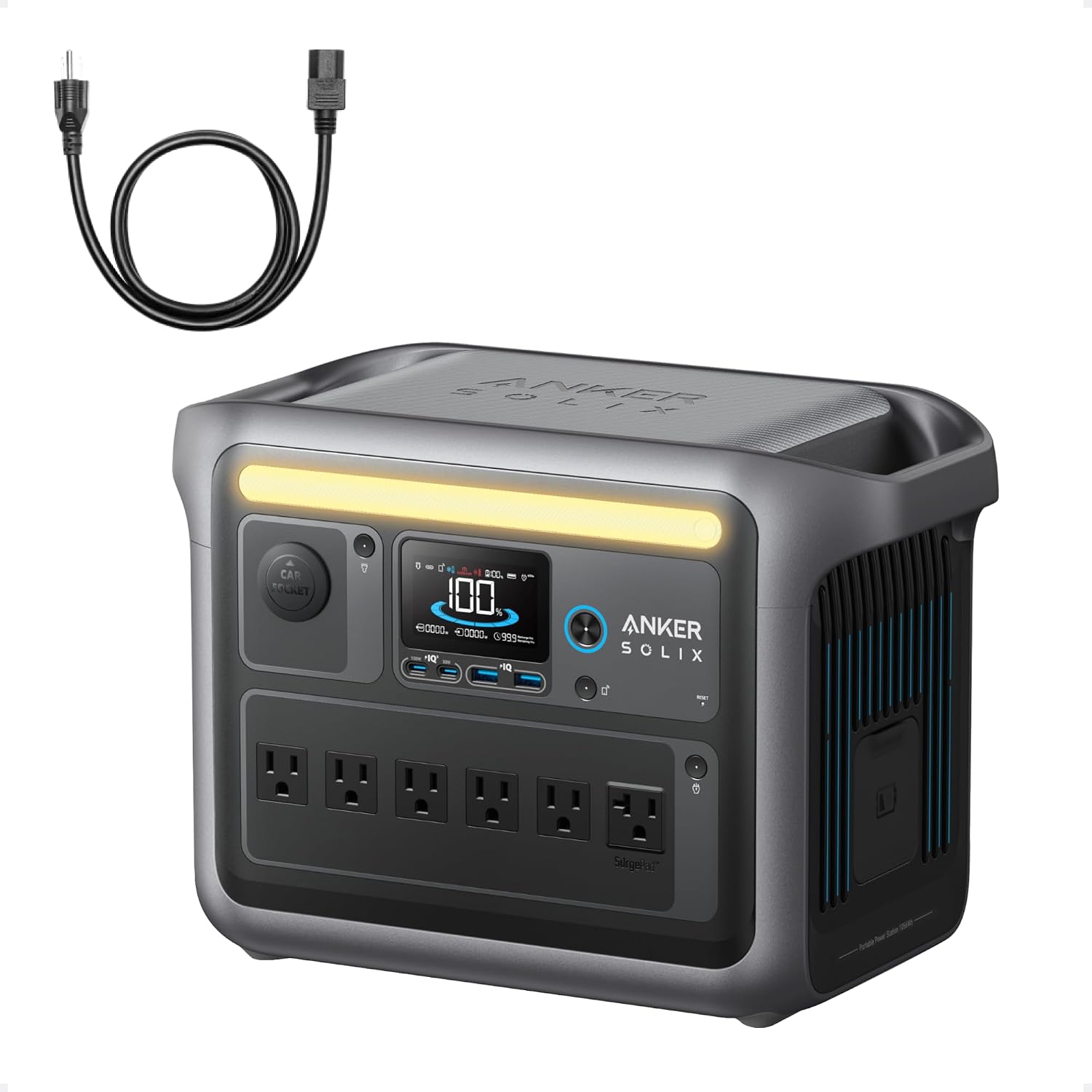
Anker SOLIX C1000
- Advertised
- 1,056 Wh
- Usable, est. 85% inverter
- 898 Wh
- Continuous
- 1,800 W
- Surge
- not stated
- Chemistry
- LiFePO4
- Rated cycles
- 3,000 to 80%
- Weight
- 28.4 lb
The first-generation C1000, still sold and now cheaper than the Gen 2: about 898 Wh usable, roughly 30 hours of a router at its rating, an 1,800 W inverter that also covers the refrigerator, and the only page in this lineup that states listings by number, four of them, including UL 1973 for the battery and UL 1778, the UPS standard. The 20 ms switchover is the slowest here and still inside what a router supply rides through. The 2,400 W SurgePad figure is a boost mode, so surge reads not stated.
Pros
- Four UL standards stated by number, UL 1778 among them
- About 30 hours at the router's rating; runs a fridge too
Cons
- 20 ms UPS, the slowest of the five
- 28 lb, and 3,000 cycles against the Elite 100 V2's 4,000
Longest runtime
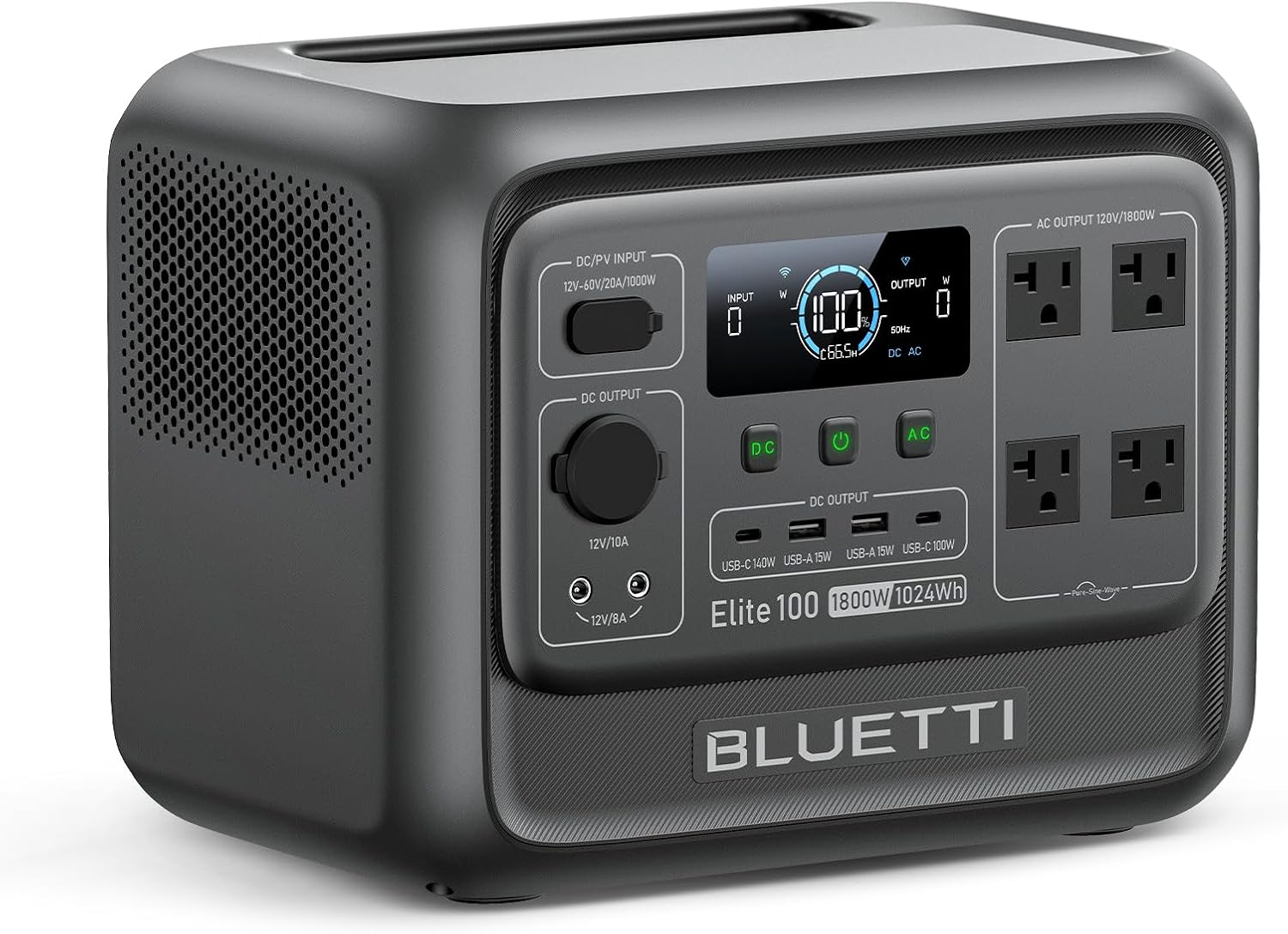
BLUETTI Elite 100 V2
- Advertised
- 1,024 Wh
- Usable, est. 85% inverter
- 870 Wh
- Continuous
- 1,800 W
- Surge
- not stated
- Chemistry
- LiFePO4
- Rated cycles
- 4,000 to 80%
- Weight
- 25 lb
About 870 Wh usable at 25 lb, with a 10 ms UPS, a 4,000-cycle rating to 80%, and a 1,000 W solar ceiling that is twice anything else in the class. Bluetti's page states a 2,700 W Lifting figure while the Amazon listing says 3,600 W surge; both are heating-load modes rather than a motor rating, so surge reads not stated. The unit to buy if the router is the first of several things on the list.
Pros
- 4,000 cycles to 80%; 1,000 W solar input
- 10 ms UPS in a 25 lb 1 kWh unit
Cons
- Top of the band; no safety listing stated
Also worth considering
Well-reviewed units that just missed the ranked list. Worth a look if the picks above are not quite right for you.
- Anker SOLIX C300 DC The C300 without the inverter: 288 Wh through USB-C and a 12 V car socket. A router that runs on 12 V can take a car-socket-to-barrel cable and skip the inverter loss entirely, which turns 8 hours into closer to 10, but it is a cable hunt, and there is no AC outlet for the modem.
- Jackery Explorer 500 v2 512 Wh and 500 W at 13 lb per its listing, buyable with 111 reviews on the check date. Jackery's site did not carry a product page for it when we looked, so it waits for a maker spec sheet before it can be ranked.
- DJI Power 1000 V2 1,024 Wh, 2,600 W and a 10 ms UPS by its listing, well reviewed and cheaper than the 1 kWh picks here. DJI's own specification page was not reachable from the United States on the check date, and this site ranks nothing it cannot read from the maker.
Frequently asked questions
How many watts does a Wi-Fi router use?
The power adapter rating is the honest ceiling: Netgear's Nighthawk RAX50 ships with a 12 V, 2.5 A supply, 30 W. Real draw is usually a third to a half of that. Add the modem's adapter, which is a second 12 V supply on most cable and fiber setups.
How long will a power station run a router?
At the 30 W adapter rating, about 8 hours from a 288 Wh unit, about 29 hours from a 1 kWh unit, and roughly twice each in practice because the rating overstates the draw. The table on this page prints the arithmetic at 85% inverter efficiency.
Do I need a UPS or a power station?
A power station with a UPS mode does both jobs: it sits plugged in, passes power through, and switches to battery in about 10 ms when the grid drops, which nearly every router supply rides through. A conventional computer UPS switches faster but carries a tenth of the capacity.
Will the internet itself stay up?
Only if the provider's equipment does. Cable and fiber networks usually stay up through local outages because the nodes have their own backup; a neighborhood-wide outage can take the node down with it. Your battery keeps your side of the line alive; it cannot keep the provider's side alive.