Battery backup for a refrigerator: how long a power station keeps food cold, from the EnergyGuide number
Hours a 1, 2 or 4 kWh power station keeps a refrigerator cold, sized from the EnergyGuide label, and five units with UPS switchover to do it unattended.
Runtime table
How long a battery runs a 18 cu ft top-freezer refrigerator
52 W running
| Usable battery | 1 kWh | 2 kWh | 4 kWh | 8 kWh |
|---|---|---|---|---|
| Annual-average draw, compressor cycling included | 16.3 h | 32.7 h | 2.7 days | 5.4 days |
The math: hours = usable Wh × 85% inverter efficiency ÷ (52 W × duty cycle). Columns are usable watt-hours, after the maker's depth-of-discharge limit. The 52 W figure is the ENERGY STAR annual energy use for a Frigidaire FFHI1835V (453 kWh per year) divided by 8,760 hours, so it already includes the compressor cycling on and off. A 30.5 cu ft Whirlpool WRFF3336S at 645 kWh per year averages 74 W. Frequent door openings and a warm kitchen raise both; the compressor's start-up draw is not on the label, which is why the picks below all carry at least 1,800 W of continuous output. Wattage source: spec sheet.
This appliance is already ticked in the sizing calculator: add the rest of your house →
A refrigerator is the appliance most people actually lose money on in an outage, and the one most brand calculators get wrong, because they multiply the compressor’s running watts by 24 hours and quote a battery three times bigger than you need. The honest number is on the yellow label. An average full-size refrigerator draws about 50 to 75 W averaged over a day, so a 1 kWh power station keeps one cold for most of a day and a 2 kWh unit for most of two.
The number on the label, not the nameplate
The EnergyGuide label states kilowatt-hours per year, measured with the door closed in a 90 degree room. Divide by 8,760 hours and you have the average draw, compressor cycling included. ENERGY STAR lists the Frigidaire FFHI1835V, an 18.3 cu ft top-freezer, at 453 kWh per year: 52 W. Whirlpool’s 30.5 cu ft WRFF3336S is listed at 645 kWh per year: 74 W. The refrigerator wattage guide has the method and more models. The table above runs on the smaller fridge; scale by your own label.
Why the small number needs a big inverter
The compressor starts several times an hour, and each start draws locked-rotor current for a fraction of a second, typically five to seven times its running current. That spike is not on the label. Every pick here carries at least 1,800 W continuous and 3,000 W surge, which is more headroom than any residential compressor needs, and it is the reason a 300 Wh camping unit with a 300 W inverter is not on this list even though its watt-hours would run the fridge for four hours. The mechanism is in running watts versus surge watts.
Set it up before the storm
Four of the five picks have a UPS mode, explained in the pass-through guide: plug the unit into the wall and the fridge into the unit, and when the grid drops the battery takes over in 10 to 20 milliseconds. The fridge never notices, you do not have to be home, and the battery is full when the outage starts rather than whatever it drained to on the shelf. That is worth more than an extra 200 Wh of capacity, which is why the DELTA 3 leads a list that contains larger units. The winter storm plan puts the refrigerator in order with the other loads.
What the runtime buys you
USDA’s rule is that a closed refrigerator keeps food safe for about 4 hours without power and a full freezer for about 48. A 1 kWh unit turns the refrigerator’s 4 hours into roughly 16; a 2 kWh unit turns it into a day and a half. The 1 kWh roundup ranks the smaller class on its own. A chest freezer wants the same class of inverter for a fraction of the energy; the chest freezer wattage guide has those figures. Keep the door closed anyway, and put a thermometer inside: the battery buys time, and the thermometer tells you whether the time was enough; the food safety page has USDA’s discard chart for when it was not. The reason a 1,024 Wh sticker becomes about 870 Wh in the table is in usable capacity versus advertised, and the sump pump page is the same arithmetic on a much hungrier motor.
How we measure
Every pick is scored on the same five criteria. Every capacity, output and certification figure is read from the manufacturer's current spec sheet at write time and dated on the card, and every runtime is computed from those figures with the arithmetic shown. When a maker does not publish a number, the card says "not stated". We never guess one.
-
Usable capacity
The advertised watt-hours against what reaches the outlet: inverter loss, the depth-of-discharge limit and idle self-consumption. We state usable capacity, not the sticker.
-
Output headroom
Continuous and surge watts against the appliances readers actually plug in. A pump that pulls 3 to 5 times its running watts at start trips an underspecced inverter; we check the surge number first.
-
Chemistry and certification
LiFePO4 versus NMC, the rated cycles to 80%, and whether the unit carries UL 2743, UL 9540 or UL 1973. We print the certification status plainly and never treat an uncertified import as equivalent.
-
Recharge and expansion
Wall recharge time, the solar input ceiling and what it means for real charge time, pass-through or UPS switchover, and whether there is an expansion-battery path.
-
Value and warranty
Price per usable kilowatt-hour, weighted by warranty years. A maker that guarantees its cycle rating in writing is telling you something the spec sheet cannot.
Price bands, relative to the picks on this page: $ budget · $$ mid-range · $$$ premium · $$$$ top shelf. Retailer prices move constantly, so we show bands rather than dollar amounts; each button shows the live price.
Best overall
EcoFlow DELTA 3
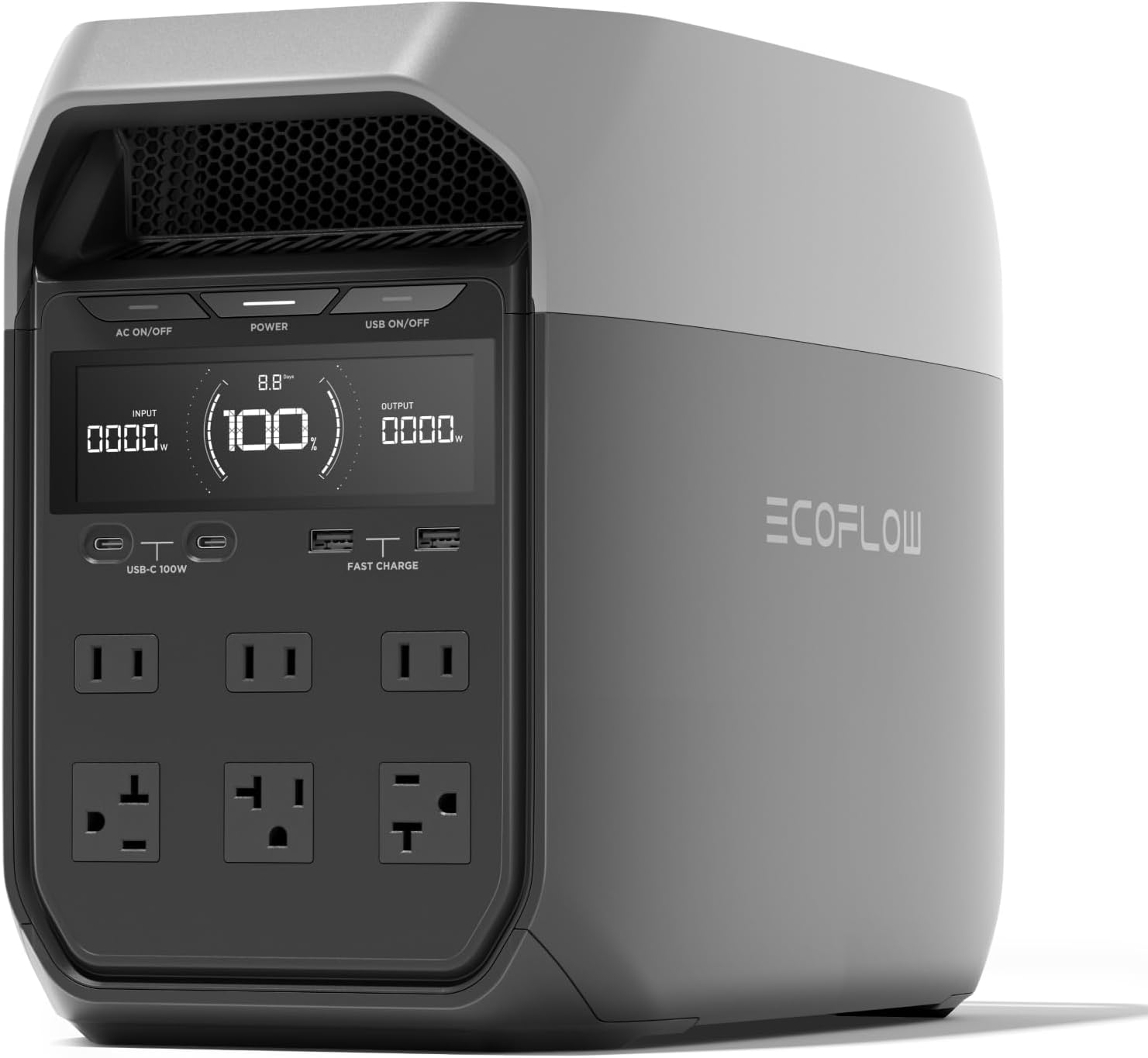
- Advertised
- 1,024 Wh
- Usable, est. 85% inverter
- 870 Wh
- Continuous
- 1,800 W
- Surge
- 3,600 W
- Chemistry
- LiFePO4 (LFP)
- Rated cycles
- 4,000 to 80%
- Weight
- 27.6 lb
About 870 Wh at the outlet, which is a little over 16 hours of an average top-freezer, with a sub-10 ms UPS switchover so it can sit between the wall and the fridge and take over without anyone home. A 3,600 W surge covers any residential compressor, and it recharges from the wall in under an hour when the grid flickers back.
Pros
- UPS switchover under 10 ms; the fridge never sees the outage
- Full recharge from the wall in 56 minutes
- 4,000 cycles to 80% and expandable with EcoFlow extra batteries
Cons
- A single day of a large French-door, not two
- No safety certification stated on the maker's page
Best value per usable Wh
BLUETTI AC180
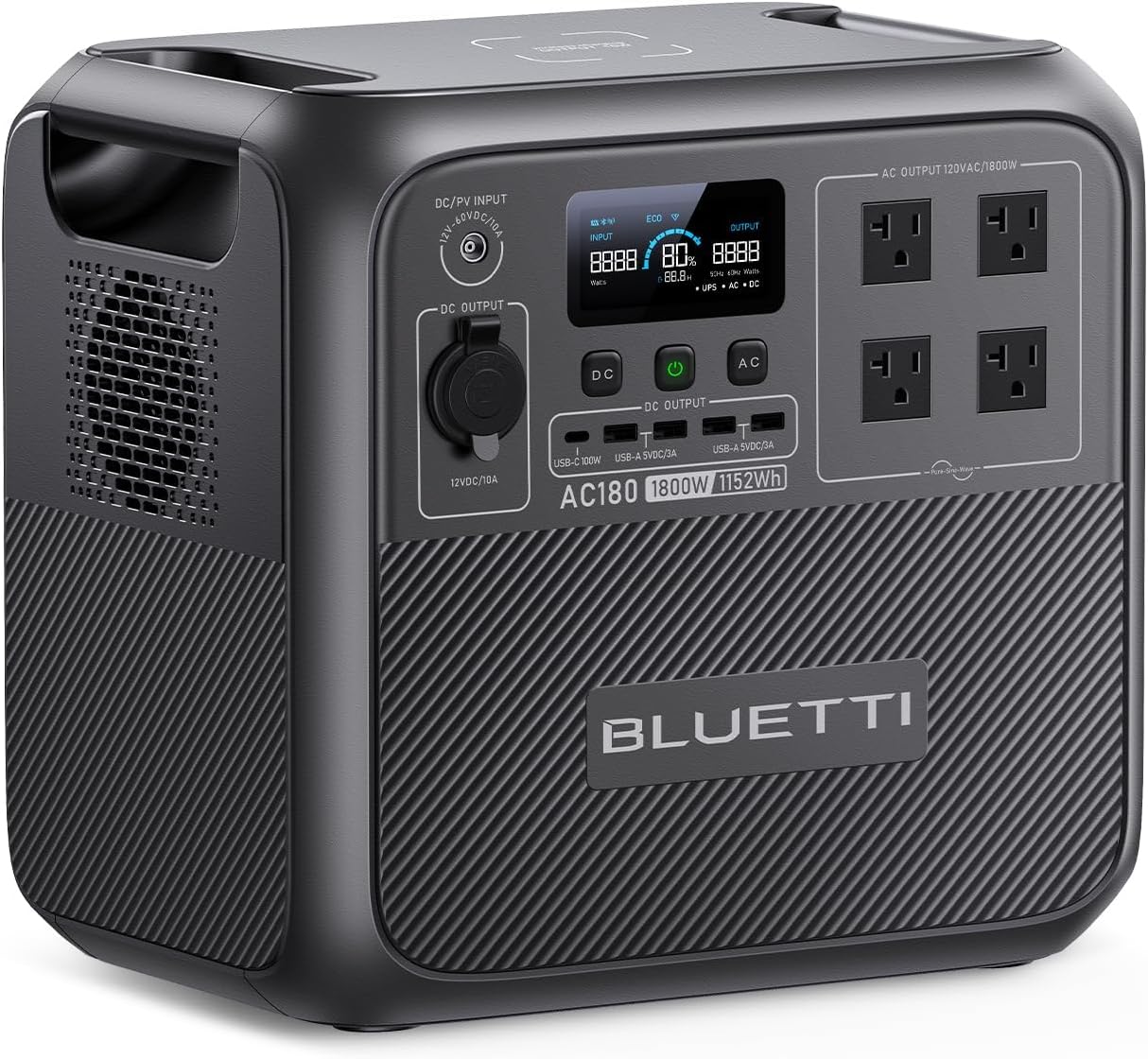
- Advertised
- 1,152 Wh
- Usable, est. 85% inverter
- 979 Wh
- Continuous
- 1,800 W
- Surge
- not stated
- Chemistry
- LiFePO4
- Rated cycles
- not stated
- Weight
- 35.3 lb
The most watt-hours in the budget band: about 980 Wh usable, roughly 19 hours of an average fridge. Bluetti states 3,500-plus cycles without saying to what capacity, and publishes a 2,700 W Power Lifting figure for heating loads rather than a motor surge rating, so those two cells read not stated on the card. The 20 ms UPS is fine for a refrigerator.
Pros
- Largest capacity in the band; 1,440 W wall input fills it in about an hour
- 20 ms UPS mode
Cons
- Motor surge rating and cycle basis not stated by the maker
- Heaviest of the 1 kWh class here at 35 lb
Lightest full-day unit
Anker SOLIX C1000 Gen 2
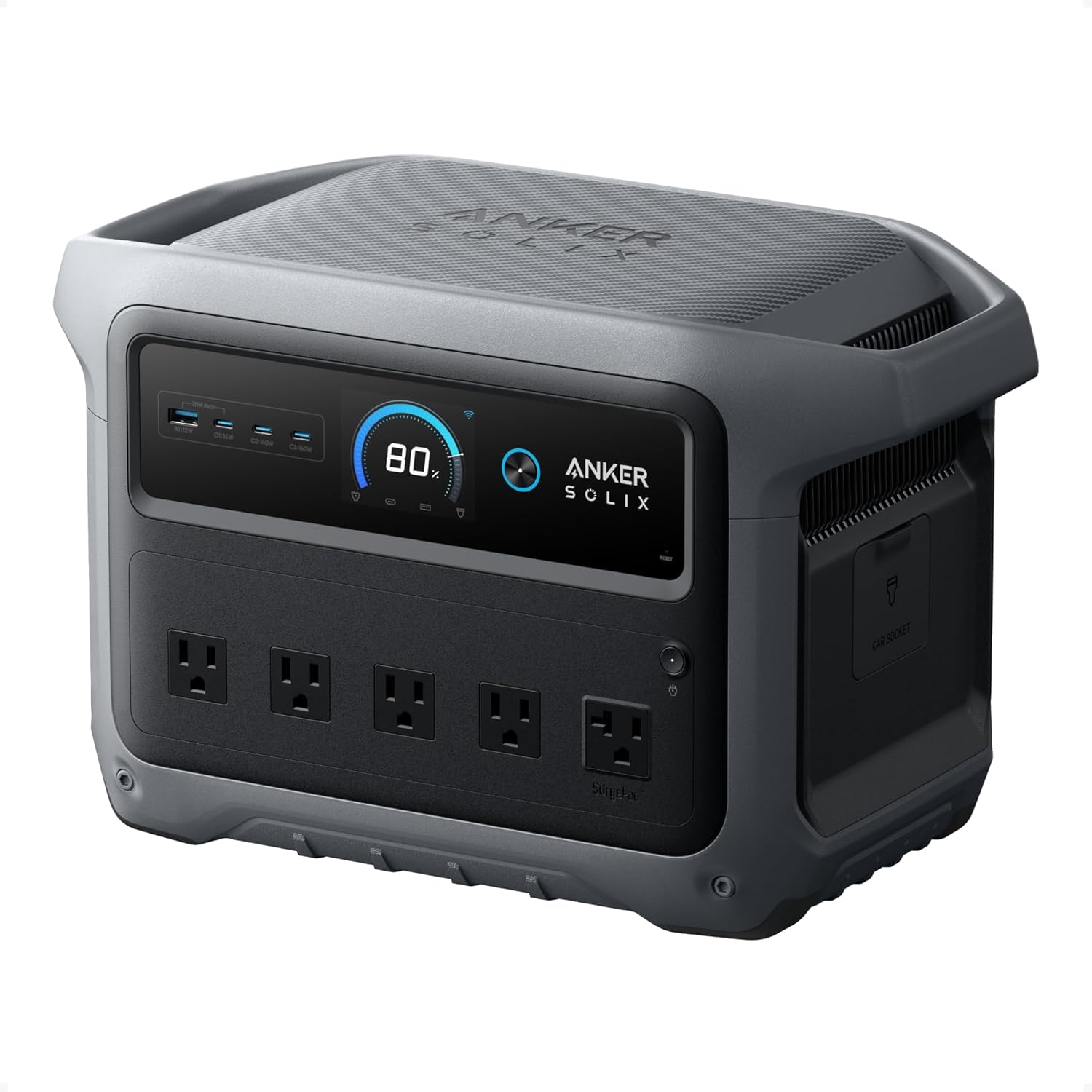
- Advertised
- 1,024 Wh
- Usable, est. 85% inverter
- 870 Wh
- Continuous
- 2,000 W
- Surge
- 3,000 W
- Chemistry
- LiFePO4 (LFP)
- Rated cycles
- 4,000 to 80%
- Weight
- 24.9 lb
Same usable capacity as the DELTA 3 in a 25 lb unit with a 10 ms UPS and a 2,000 W continuous rating. The one you can move from the kitchen to the garage freezer without thinking about it.
Pros
- 24.9 lb, 10 ms UPS, 49-minute recharge
Cons
- 600 W solar ceiling if the outage runs long
Best for a two-day outage
EcoFlow DELTA 2 Max
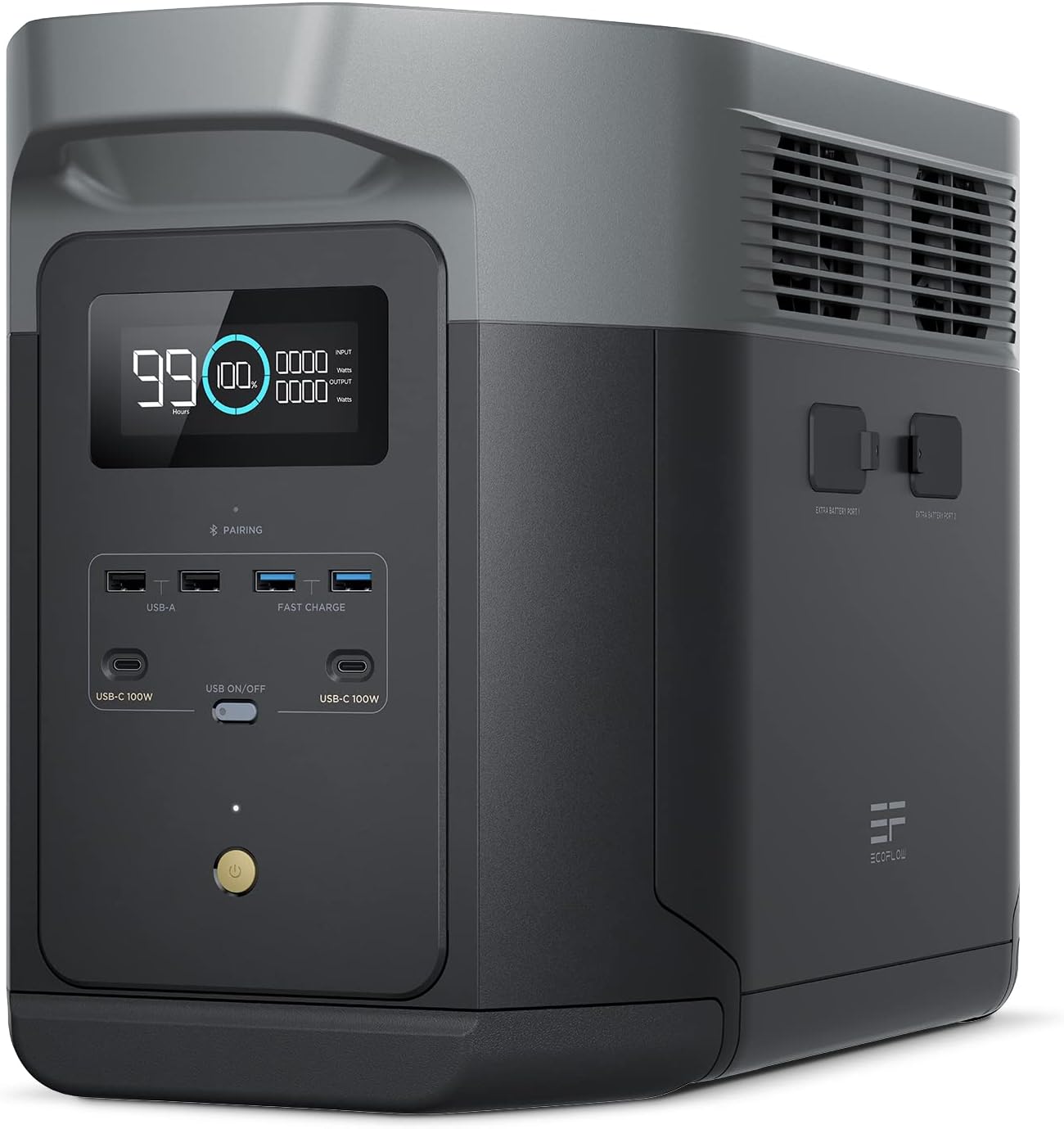
- Advertised
- 2,048 Wh
- Usable, est. 85% inverter
- 1,741 Wh
- Continuous
- 2,400 W
- Surge
- 4,800 W
- Chemistry
- LiFePO4 (LFP)
- Rated cycles
- 3,000 to 80%
- Weight
- 50 lb
About 1,740 Wh usable is a day and a half of an average fridge or a full day of a large French-door with the router and a few phones on the same unit. The 1,000 W solar ceiling is what turns a two-day outage into an indefinite one.
Pros
- Runs a fridge plus the rest of a kitchen counter
- 1,000 W solar input, expandable to 6,144 Wh
Cons
- Fifty pounds; it lives where it is charged
Best 2 kWh value
Anker SOLIX C2000 Gen 2
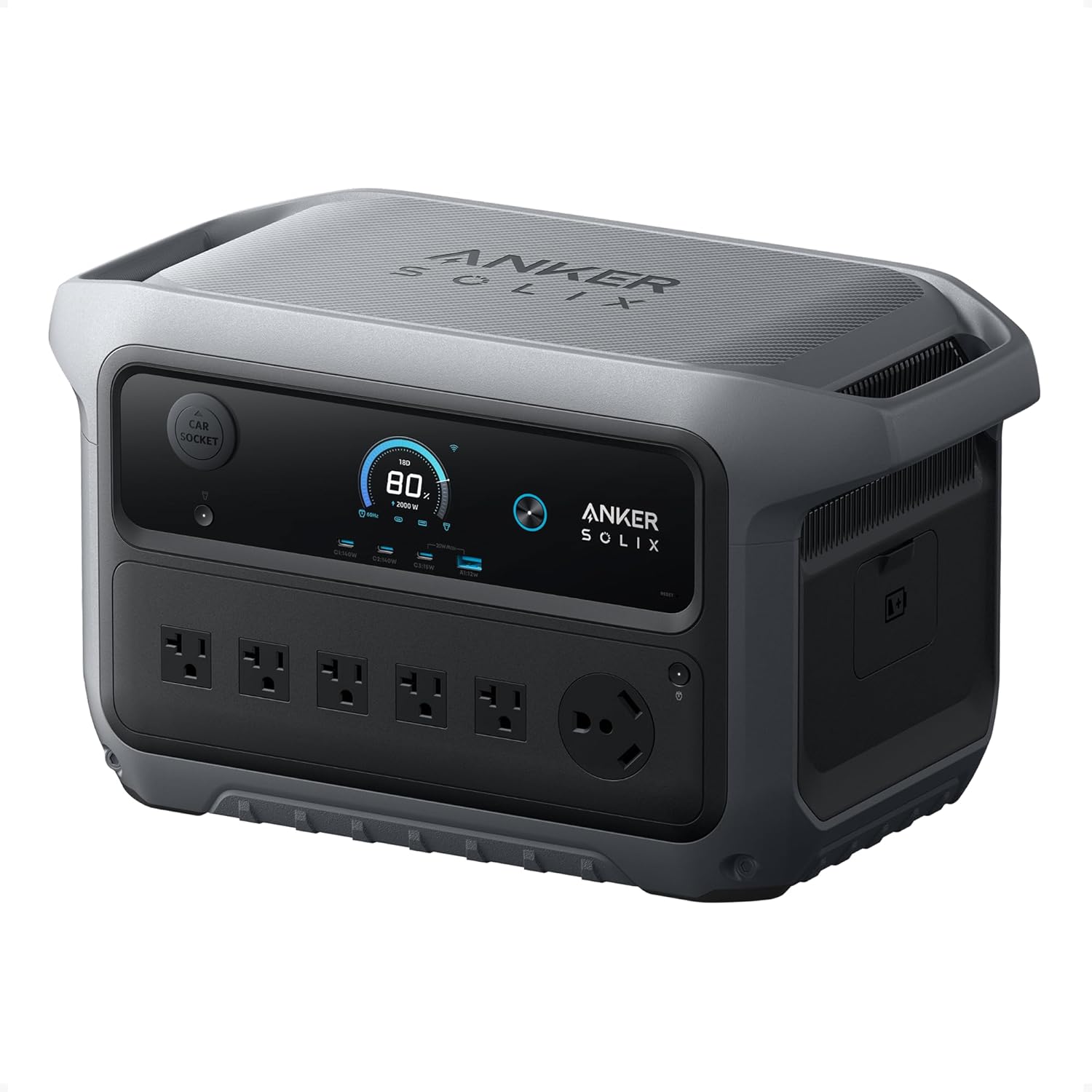
- Advertised
- 2,048 Wh
- Usable, est. 85% inverter
- 1,741 Wh
- Continuous
- 2,400 W
- Surge
- 4,000 W
- Chemistry
- LiFePO4 (LFP)
- Rated cycles
- 4,000 to 80%
- Weight
- 41.7 lb
The DELTA 2 Max's capacity eight pounds lighter with a 10 ms UPS and a 4,000-cycle rating, at the cost of a lower solar ceiling. For a fridge that just needs to stay cold through a long weekend, the better buy of the two.
Pros
- 10 ms UPS, 41.7 lb, recharge in under an hour
Cons
- 800 W solar ceiling
Also worth considering
Well-reviewed units that just missed the ranked list. Worth a look if the picks above are not quite right for you.
- EcoFlow DELTA 3 Plus The DELTA 3 with 140 W USB-C and a wider extra-battery list; the same fridge math.
- BLUETTI Elite 200 V2 2,073.6 Wh and 6,000 cycles for a unit that will also cycle on solar daily; its motor surge rating is not stated by the maker.
- BLUETTI AC200L 2,048 Wh and 2,400 W with a 30 A RV outlet; Bluetti's page publishes neither weight nor cycle rating, so it is not ranked.
Frequently asked questions
How long will a 1,000 Wh power station run a refrigerator?
For an 18 cu ft top-freezer averaging 52 W, about 16 hours at 85% inverter efficiency. A large French-door averaging 74 W gets about 11 hours. Those are averages over a full day; a fridge that is opened often in a hot kitchen runs shorter.
Does a refrigerator need a surge rating?
Yes. The compressor is a capacitor-start motor and its locked-rotor current is several times its running current for a fraction of a second. Refrigerator makers do not print that figure on the EnergyGuide label, so every pick here has at least 1,800 W continuous and 3,000 W surge, which covers residential compressors with room to spare.
Should I plug the fridge into the battery before the power goes out?
If the unit has a UPS or pass-through mode, yes: the battery stays full from the wall and takes over in milliseconds when the grid drops, and the fridge never sees the outage. Four of the five picks switch in 20 ms or less.
How long is food safe without power?
USDA guidance: a closed refrigerator keeps food safe for about 4 hours, a full freezer for about 48 hours and a half-full freezer for 24. A battery extends those windows; it does not replace the thermometer.