Portable power station for a CPAP: how many nights, from ResMed's own power figures
Runtime for a CPAP with and without the humidifier, computed from ResMed's published draw, and five buyable units ranked for a night, a weekend and a week.
Runtime table
How long a battery runs a CPAP with heated humidifier (ResMed AirSense 10)
53 W running
| Usable battery | 1 kWh | 2 kWh | 4 kWh | 8 kWh |
|---|---|---|---|---|
| Typical draw, humidifier on (ResMed's figure) | 16.0 h | 32.1 h | 2.7 days | 5.3 days |
The math: hours = usable Wh × 85% inverter efficiency ÷ (53 W × duty cycle). Columns are usable watt-hours, after the maker's depth-of-discharge limit. ResMed's AirSense 10 user guide lists typical power consumption of 53 W (57 VA) and peak consumption of 104 W (108 VA) with the humidifier. Humidifier and heated tube are most of that draw; with both off the device draws a fraction of it, but ResMed does not publish that figure, so the table uses the typical one and the low-draw case is described in prose. An 8-hour night at 53 W is 424 Wh at the outlet. Wattage source: spec sheet.
This appliance is already ticked in the sizing calculator: add the rest of your house →
A CPAP is the appliance where the runtime question has a personal answer, and it is also the one where brand calculators are least useful, because “how many hours” depends on whether the humidifier is on. ResMed publishes the figures: 53 W typical and 104 W peak for an AirSense 10 with humidifier. Everything below is computed from that, and the note at the top of this page is not decoration: this is power math, and the person who signs off on your backup plan is your equipment provider.
Two machines in one
With the heated humidifier and tube on, an AirSense 10 draws ResMed’s typical 53 W, and an 8-hour night is about 424 Wh at the outlet. With both off, the blower alone draws a fraction of that. ResMed does not publish the humidifier-off figure, so the runtime table is built on 53 W and the smaller units are described honestly: a 286 Wh unit is 4.6 humidified hours, or a full night and change without humidity. If you can sleep without the humidifier for a night, the small units work; if you cannot, the 1 kWh class is the floor. The usable capacity guide explains why 286 Wh becomes 243 in the table.
DC beats AC for this one appliance
Every runtime here assumes the inverter’s 15% loss. A CPAP does not need an inverter: the machine runs on 24 V DC behind its own power brick, and ResMed sells a DC converter for the AirSense line that plugs into a 12 V car socket. Run it that way and the loss disappears, the battery runs silent, and a 288 Wh DC-only unit like the C300 DC becomes a full humidified night. Buy the converter from the machine’s maker.
Set it up as a UPS
Four of the five picks switch from wall to battery in 10 to 20 ms when the grid drops; the pass-through guide covers the setup. None of them boards a plane: the flying guide has the FAA’s limits and what a CPAP traveler packs instead. Plugged in that way the unit is always full when the outage starts and the machine keeps running through the switch. Whether a 20 ms gap matters for your machine and your prescription is the provider’s call, not ours, which is the point of the note above.
Why no surge talk
The running versus surge watts guide is the spine of this site, and a CPAP is the appliance it does not apply to: a blower on an electronic supply has no locked-rotor spike, and ResMed’s 104 W peak is the ceiling. That is why small inverters are ranked here that would never appear on the sump pump or refrigerator pages. The AC180 is on the list for the household that wants one unit to do both jobs.
How we measure
Every pick is scored on the same five criteria. Every capacity, output and certification figure is read from the manufacturer's current spec sheet at write time and dated on the card, and every runtime is computed from those figures with the arithmetic shown. When a maker does not publish a number, the card says "not stated". We never guess one.
-
Usable capacity
The advertised watt-hours against what reaches the outlet: inverter loss, the depth-of-discharge limit and idle self-consumption. We state usable capacity, not the sticker.
-
Output headroom
Continuous and surge watts against the appliances readers actually plug in. A pump that pulls 3 to 5 times its running watts at start trips an underspecced inverter; we check the surge number first.
-
Chemistry and certification
LiFePO4 versus NMC, the rated cycles to 80%, and whether the unit carries UL 2743, UL 9540 or UL 1973. We print the certification status plainly and never treat an uncertified import as equivalent.
-
Recharge and expansion
Wall recharge time, the solar input ceiling and what it means for real charge time, pass-through or UPS switchover, and whether there is an expansion-battery path.
-
Value and warranty
Price per usable kilowatt-hour, weighted by warranty years. A maker that guarantees its cycle rating in writing is telling you something the spec sheet cannot.
Price bands, relative to the picks on this page: $ budget · $$ mid-range · $$$ premium · $$$$ top shelf. Retailer prices move constantly, so we show bands rather than dollar amounts; each button shows the live price.
Best overall
Jackery Explorer 1000 v2
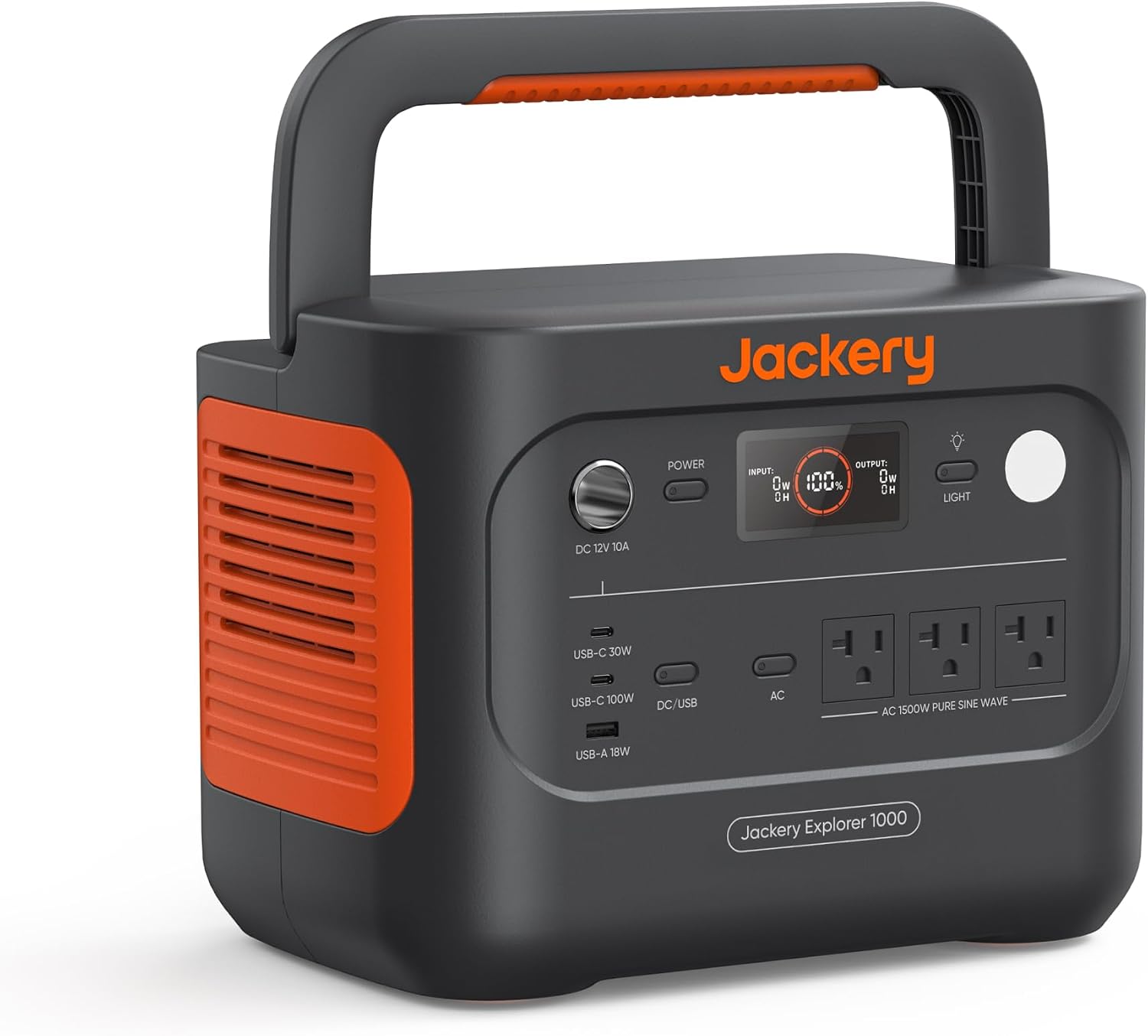
- Advertised
- 1,070 Wh
- Usable, est. 85% inverter
- 910 Wh
- Continuous
- 1,500 W
- Surge
- 3,000 W
- Chemistry
- LiFePO4
- Rated cycles
- 4,000 to 70%
- Weight
- 23.8 lb
About 910 Wh at the outlet, which is two full humidified nights at ResMed's 53 W typical figure or most of a week with the humidifier off, in a 23.8 lb unit with a 12 V car port for a DC converter. Jackery rates its cycles to 70% rather than the 80% most makers use, and the card says so. The one to buy if the outage might last.
Pros
- Two humidified nights per charge; days without the humidifier
- 23.8 lb, full recharge from the wall in about an hour
Cons
- Cycle rating is to 70%, not 80%
- No safety certification stated on the maker's page
Best bedside UPS
EcoFlow RIVER 3 Plus
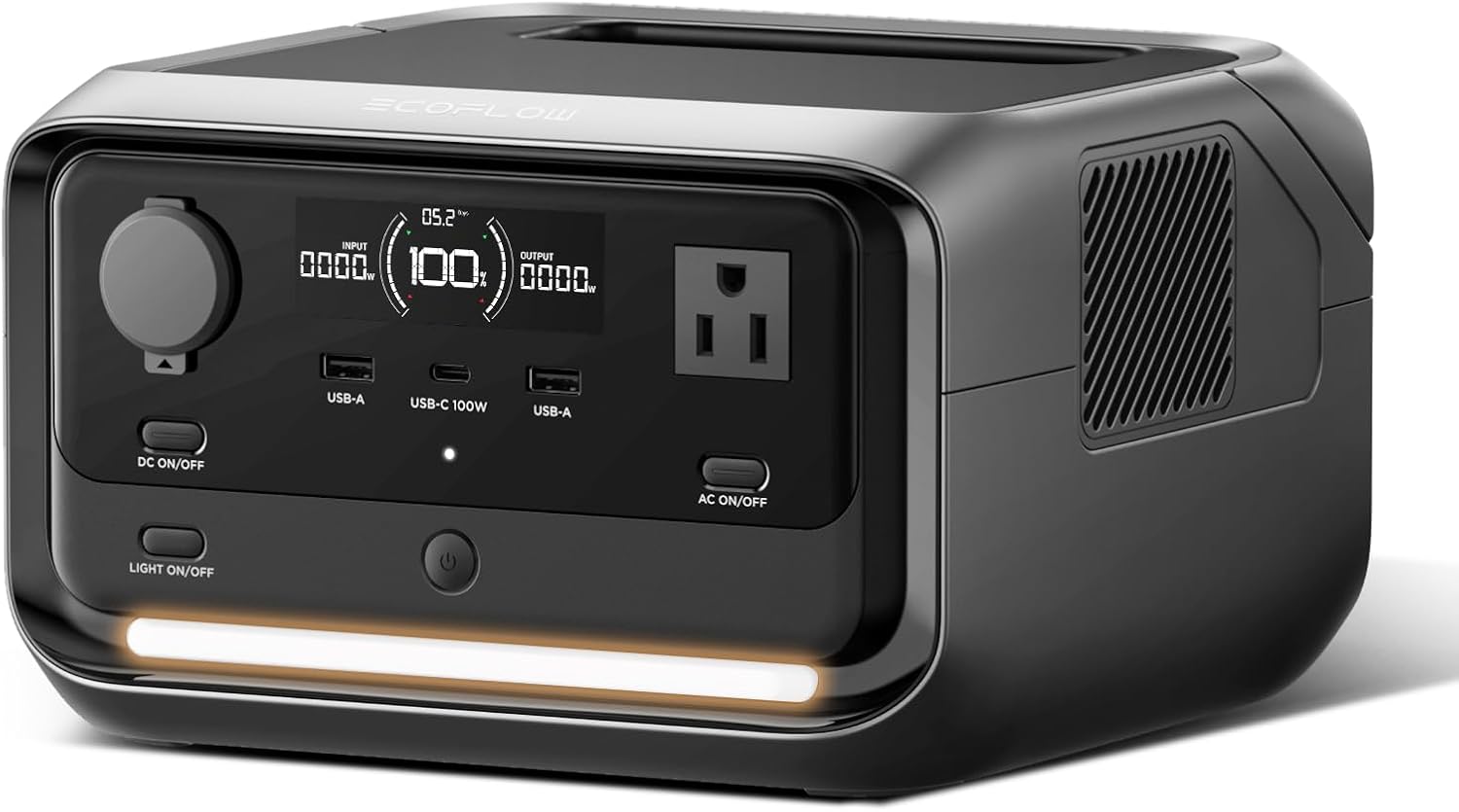
- Advertised
- 286 Wh
- Usable, est. 85% inverter
- 243 Wh
- Continuous
- 600 W
- Surge
- 1,200 W
- Chemistry
- LiFePO4
- Rated cycles
- 3,000 to 80%
- Weight
- 10.4 lb
A 10.4 lb unit that lives on the nightstand plugged into the wall, with a sub-10 ms UPS switchover and a 30 dB noise figure. About 243 Wh at the outlet: 4.6 hours humidified, a full night and more with the humidifier off. EcoFlow's extra batteries take it to 858 Wh if the nights add up.
Pros
- Under 10 ms UPS; quiet enough for a bedroom
- Expandable to 858 Wh with EcoFlow extra batteries
Cons
- Not a full humidified night on its own
Best DC-direct
Anker SOLIX C300 DC
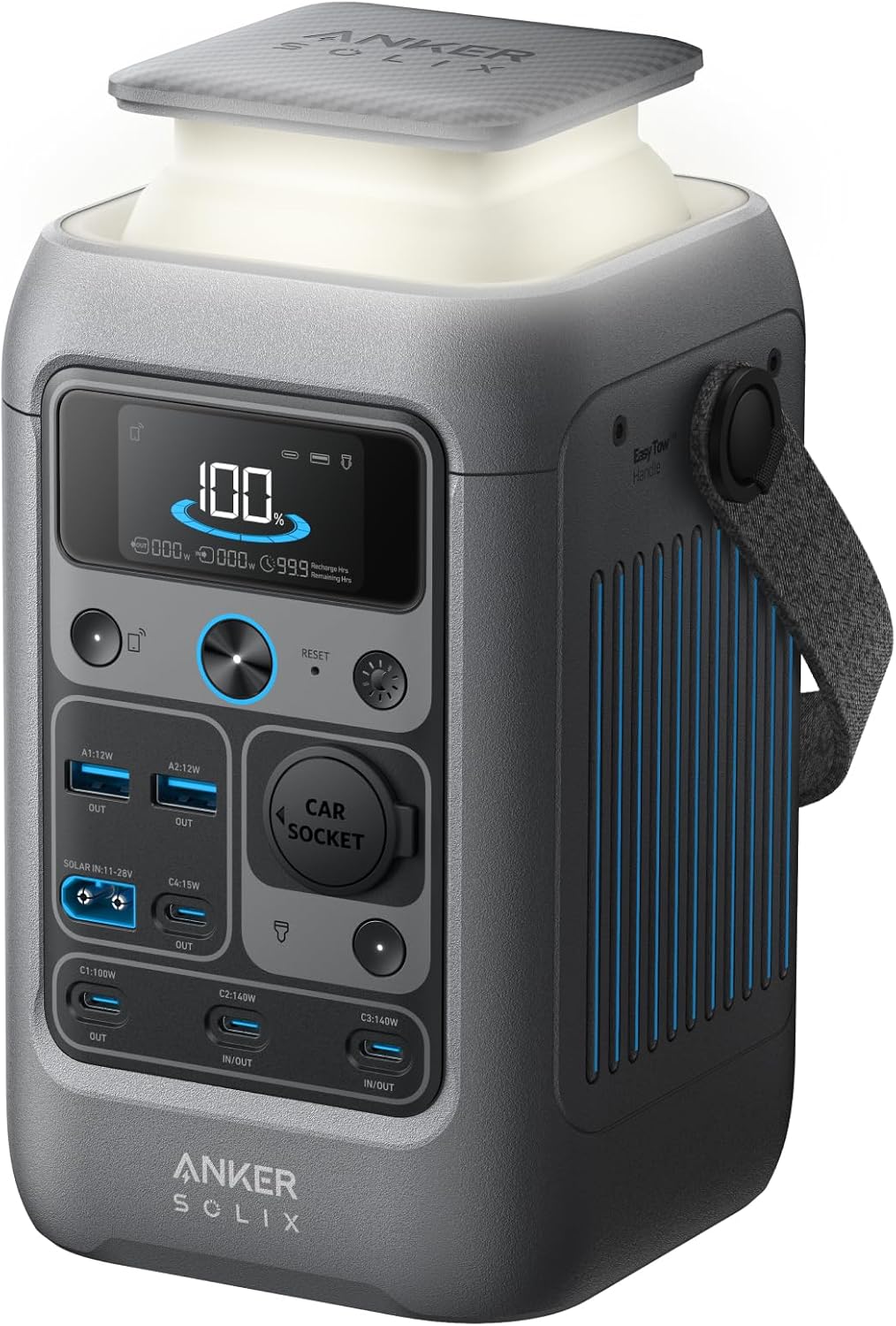
- Advertised
- 288 Wh
- Usable, est. 85% inverter
- 245 Wh
- Continuous
- 300 W
- Surge
- not stated
- Chemistry
- LiFePO4 (LFP)
- Rated cycles
- not stated
- Weight
- not stated
No AC inverter at all: 288 Wh delivered through 140 W USB-C ports and a car socket, which is exactly what a CPAP running on its maker's DC converter wants, because there is no inverter loss to lose. Anker's page states capacity, output and LFP chemistry but not weight, cycles or surge, and the card leaves those as not stated. Sold out on Anker's own store at the check date; the Amazon listing was buyable.
Pros
- DC-only design skips the inverter loss
- Recharges from any 30 W USB-C charger
Cons
- No AC outlet; needs the CPAP maker's DC converter
- Weight and cycle rating not stated on the maker's page
Lightest with an AC outlet
Anker SOLIX C300
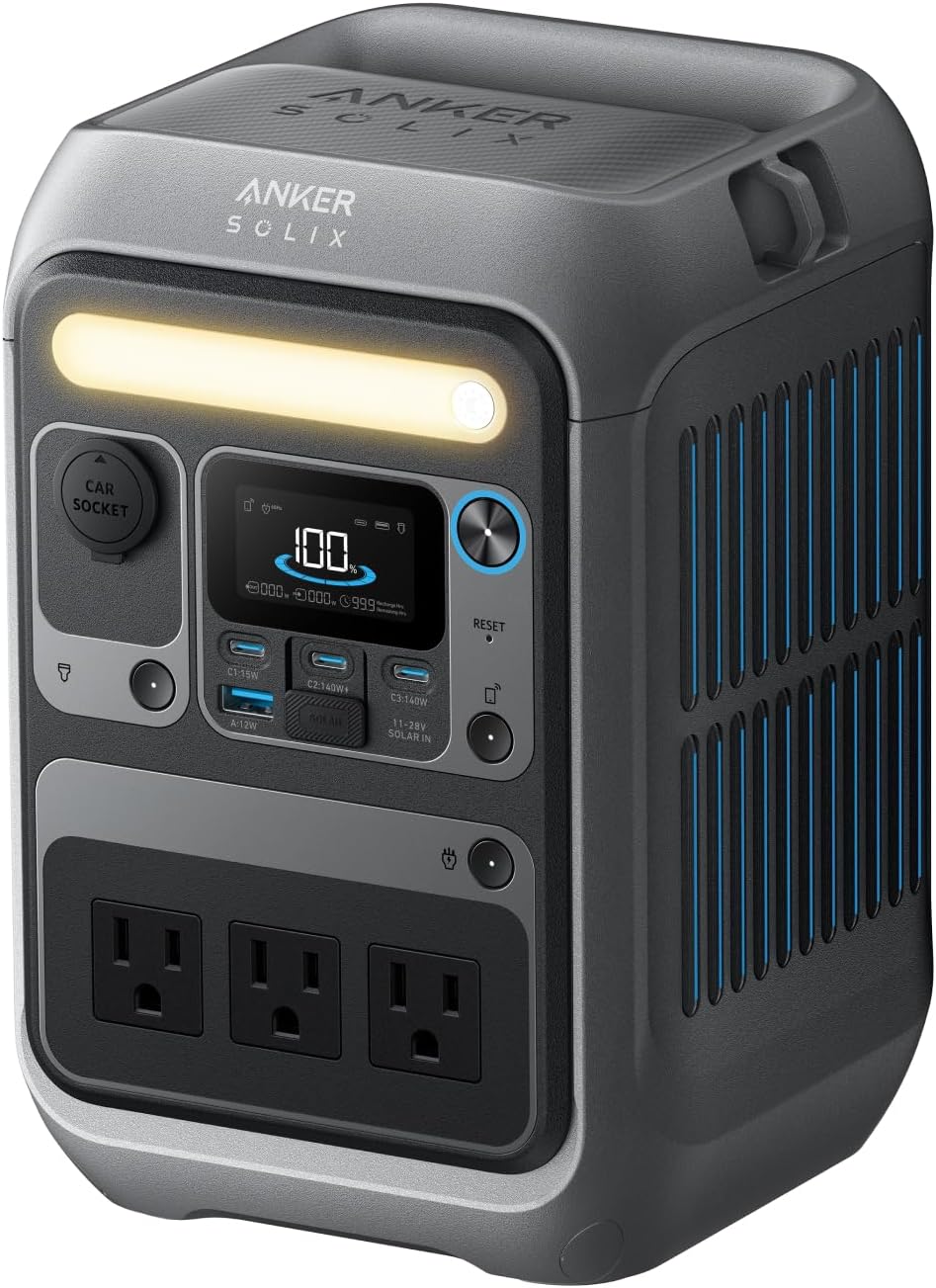
- Advertised
- 288 Wh
- Usable, est. 85% inverter
- 245 Wh
- Continuous
- 300 W
- Surge
- not stated
- Chemistry
- LiFePO4 (LFP)
- Rated cycles
- not stated
- Weight
- not stated
The C300 DC with three AC outlets added and a 10 ms UPS mode, for a machine that has no DC converter. Anker markets a 600 W SurgePad figure, which is a boost mode rather than a motor surge rating and irrelevant to a CPAP anyway. Weight is not stated on the maker's page.
Pros
- AC outlets plus 10 ms UPS in a small unit
- Five-year warranty
Cons
- Weight and cycle basis not stated on the maker's page
Best for CPAP plus the refrigerator
BLUETTI AC180
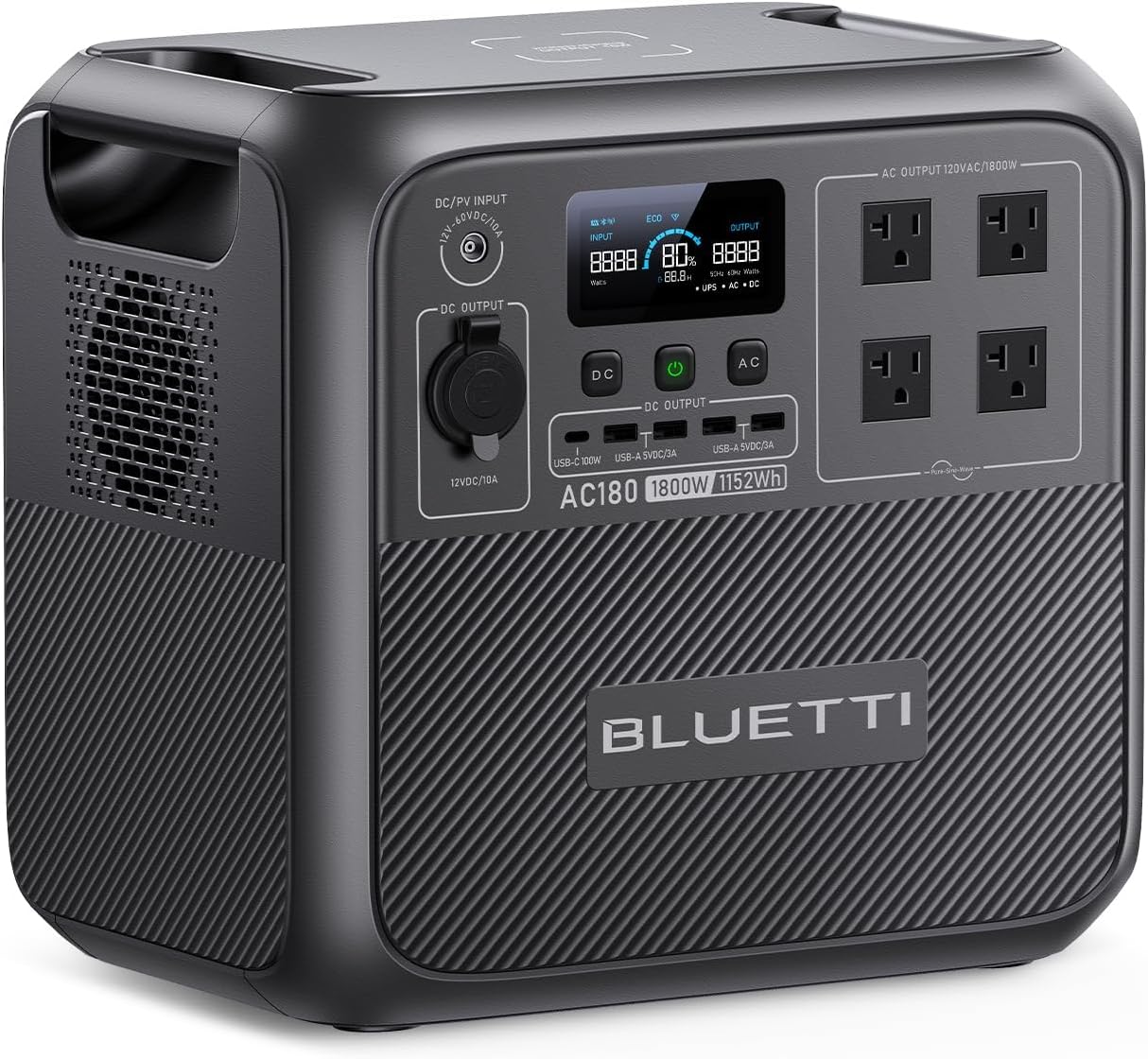
- Advertised
- 1,152 Wh
- Usable, est. 85% inverter
- 979 Wh
- Continuous
- 1,800 W
- Surge
- not stated
- Chemistry
- LiFePO4
- Rated cycles
- not stated
- Weight
- 35.3 lb
About 980 Wh usable and an 1,800 W inverter, which is the CPAP for two nights and the refrigerator on the same unit for most of a day. Bluetti states 3,500-plus cycles without a capacity basis and a heating-load Power Lifting figure rather than a surge rating; both read not stated on the card.
Pros
- Enough inverter for a fridge alongside the CPAP
- 20 ms UPS mode; 1,440 W wall input
Cons
- 35 lb; a bedroom-to-kitchen unit, not a travel one
Frequently asked questions
How many watt-hours does a CPAP use per night?
With ResMed's typical 53 W figure for an AirSense 10 with humidifier, an 8-hour night is about 424 Wh at the outlet, roughly 500 Wh of usable battery once inverter loss is included. With the humidifier and heated tube off the draw falls sharply; the maker does not publish that number, so plan from the 53 W figure and treat humidifier-off as margin.
Will a 300 Wh power station run a CPAP all night?
Without the humidifier, usually yes. With the humidifier on, ResMed's 53 W typical figure gives about 4.6 hours from 286 Wh at 85% inverter efficiency, which is not a night. The 1 kWh class covers two humidified nights.
Should I run a CPAP from the battery's DC port instead of the AC outlet?
If the machine's maker sells a DC converter, yes: it skips the inverter, which recovers the roughly 15% the table's arithmetic gives up, and the battery runs quieter. ResMed sells a 24 V DC converter for the AirSense line. Buy the converter from the machine maker, not a generic one.
Can I use the power station as a UPS so the CPAP never stops?
Four of the five picks have a UPS or pass-through mode that switches to battery in 10 to 20 ms when the grid drops. Whether that gap is acceptable is a question for your equipment provider, per the note at the top of this page.