Generator for a well pump: battery or gas, sized from the motor's locked-rotor amps
Franklin publishes 5 A running and 32.2 A locked rotor for a 1/2 HP well pump motor. What that means for a generator, and the two batteries that clear it.
Runtime table
How long a battery runs a 1/2 HP submersible well pump (230 V, 2-wire)
1,150 W running 7,406 W surge at start 115 W average at 10% duty
| Usable battery | 1 kWh | 2 kWh | 4 kWh | 8 kWh |
|---|---|---|---|---|
| Running continuously | 44 min | 1.5 h | 3.0 h | 5.9 h |
| Typical duty, 10% of each hour | 7.4 h | 14.8 h | 29.6 h | 2.5 days |
Surge check: the inverter's surge rating must clear 7,406 W or the unit trips at start-up no matter how many watt-hours it holds.
The math: hours = usable Wh × 85% inverter efficiency ÷ (1,150 W × duty cycle). Columns are usable watt-hours, after the maker's depth-of-discharge limit. Franklin Electric's 1/2 HP 230 V 2-wire motor is listed at 5 A full load (1,150 W), 6 A service-factor maximum and 32.2 A locked rotor, which is about 7,400 VA for the fraction of a second the motor starts. The 115 V version is 12 A maximum and 64.4 A locked rotor, the same 7,400 VA. Figures are Franklin's, read from dealer spec sheets that reproduce them. The 10% duty cycle, six minutes of pumping an hour, is deliberately at the heavy end: USGS puts household use at 80 to 100 gallons per person per day, which a 10 gallon-per-minute pump moves in under an hour for a family of four. Irrigation or livestock push it up; the well pump wattage guide has the table. Wattage source: spec sheet.
This appliance is already ticked in the sizing calculator: add the rest of your house →
A well pump is the appliance that separates backup power that works from backup power that looked fine on the box. The motor draws about six times its running current for the instant it starts, and Franklin Electric, which makes most of the motors in American wells, publishes exactly how much. Size from that number and the choice between a generator and a battery makes itself.
The number that decides it
Franklin’s 1/2 HP 230 V 2-wire motor: 5 A full load, 6 A service-factor maximum, 32.2 A locked rotor. At 230 V that is 1,150 W running and about 7,400 VA at start. The 115 V version of the same motor is 12 A maximum and 64.4 A locked rotor, the same 7,400 VA. A 1 HP motor is listed at 48.7 A locked rotor at 230 V, about 11,200 VA. The running versus surge watts guide explains why this is a capacitor-start motor’s signature and why the sump pump on the sump pump page starts so much more gently.
Gas generator: the sizing rule and the rule that matters more
A generator’s “starting watts” rating has to clear the motor’s locked-rotor VA with margin, so a 1/2 HP well pump wants a 7,500 W-start generator with a 240 V outlet, and a 1 HP pump wants more. The 3,000 to 4,000 W inverter generators that are quiet and efficient for a refrigerator will not start it. That is the sizing rule. The rule that matters more is the red callout at the top of this page: a generator runs outdoors, far from openings, with CO alarms inside, every time. We do not rank gas generators on this site; the comparison is here so the battery numbers have context.
Battery: two units clear it on the makers’ numbers
A battery has to do the same thing a generator does, deliver 240 V and survive a 7,400 VA start, and very few single units can. On the makers’ own stated figures, two do: the Anker SOLIX F3800 with a stated 9,000 W surge, and the EcoFlow DELTA Pro Ultra with 7,200 W continuous and no stated surge figure at all, ranked on its continuous rating alone. That is why this page ranks two rather than five: padding it with 4,000 W units that would trip on the pump would be the exact failure this site exists to prevent. The two are compared line by line on the F3800 versus DELTA Pro Ultra page, and the wider class, including the 120 V systems, on the expandable roundup.
How long the water lasts
Once the pump starts, it is a modest load. At a 10% duty cycle, six minutes of pumping an hour and deliberately on the heavy side, the 1,150 W motor averages 115 W, and the runtime table shows what that means: a 4 kWh class battery is more than a day, an 8 kWh system nearly three. Water use sets the duty cycle, and the well pump wattage guide prices it from gallons: most households pump for well under an hour a day. The usable capacity guide covers why the table’s columns are usable watt-hours rather than the sticker.
The part that is not yours to do
A well pump is hardwired on a dedicated circuit, usually 240 V, often through a pressure switch and a control box. Connecting any backup source to it means a transfer switch or a generator inlet, installed and permitted by a licensed electrician; the transfer switch page explains what that device does. Both ranked units are sold with transfer-switch bundles for that reason. This page sizes the source; it does not connect it.
How we measure
Every pick is scored on the same five criteria. Every capacity, output and certification figure is read from the manufacturer's current spec sheet at write time and dated on the card, and every runtime is computed from those figures with the arithmetic shown. When a maker does not publish a number, the card says "not stated". We never guess one.
-
Usable capacity
The advertised watt-hours against what reaches the outlet: inverter loss, the depth-of-discharge limit and idle self-consumption. We state usable capacity, not the sticker.
-
Output headroom
Continuous and surge watts against the appliances readers actually plug in. A pump that pulls 3 to 5 times its running watts at start trips an underspecced inverter; we check the surge number first.
-
Chemistry and certification
LiFePO4 versus NMC, the rated cycles to 80%, and whether the unit carries UL 2743, UL 9540 or UL 1973. We print the certification status plainly and never treat an uncertified import as equivalent.
-
Recharge and expansion
Wall recharge time, the solar input ceiling and what it means for real charge time, pass-through or UPS switchover, and whether there is an expansion-battery path.
-
Value and warranty
Price per usable kilowatt-hour, weighted by warranty years. A maker that guarantees its cycle rating in writing is telling you something the spec sheet cannot.
Price bands, relative to the picks on this page: $ budget · $$ mid-range · $$$ premium · $$$$ top shelf. Retailer prices move constantly, so we show bands rather than dollar amounts; each button shows the live price.
Clears the start with margin
Anker SOLIX F3800
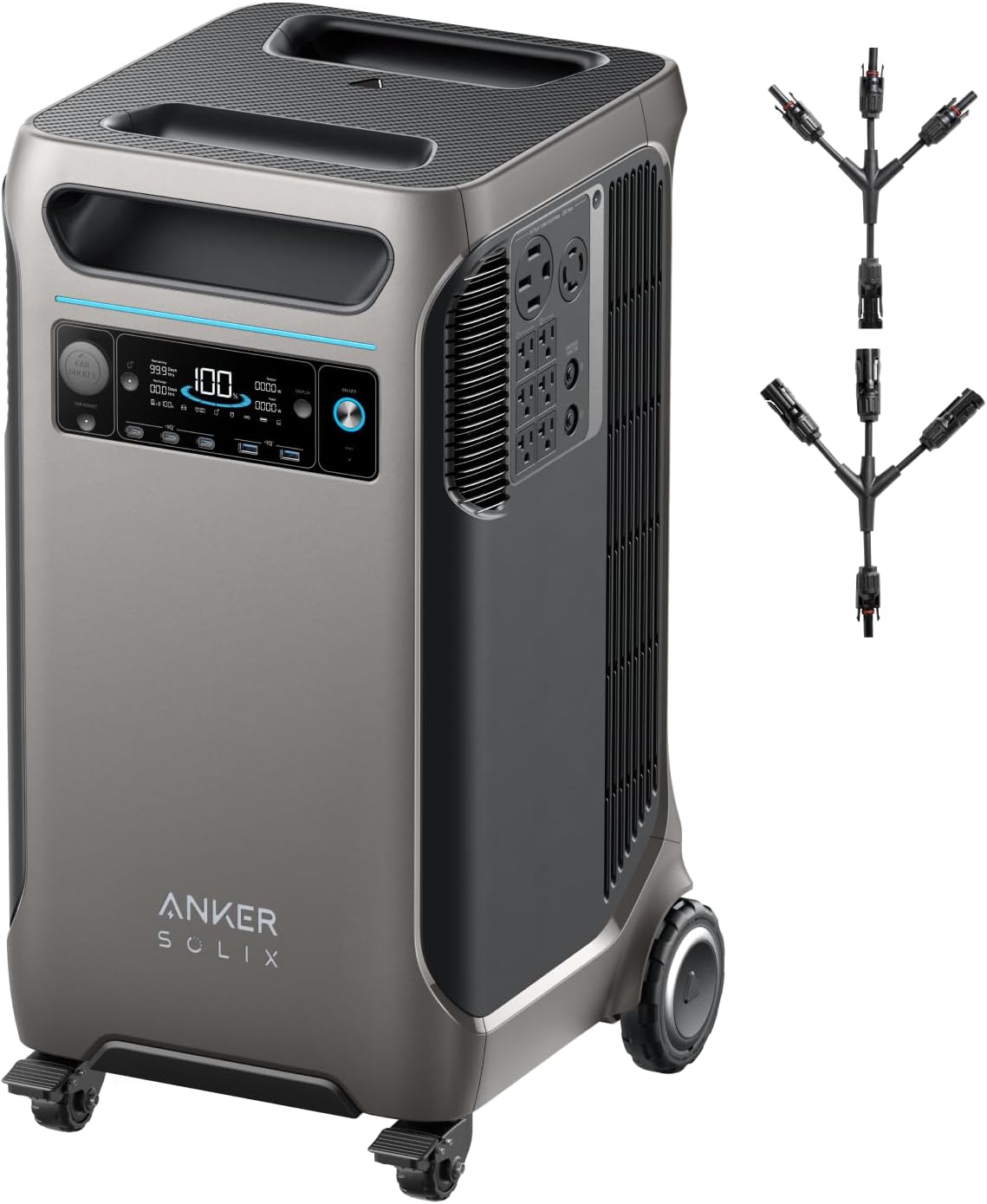
- Advertised
- 3,840 Wh
- Usable, est. 85% inverter
- 3,264 Wh
- Continuous
- 6,000 W
- Surge
- 9,000 W
- Chemistry
- LiFePO4 (LFP)
- Rated cycles
- not stated
- Weight
- 132.3 lb
The only single unit here whose maker states a surge figure, 9,000 W, above a 1/2 HP motor's 7,400 VA start, with 240 V output from one box and 6,000 W continuous. About 3,260 Wh usable is a full day of the pump at a heavy 10% duty, and it expands to 53.8 kWh. Anker states 3,000-plus cycles without a capacity basis, so the card leaves cycles as not stated.
Pros
- 9,000 W surge and 240 V from a single unit
- 2,400 W solar input; expandable to 53.8 kWh
Cons
- 132 lb; it is installed, not carried
- Cycle basis and safety certification not stated on the maker's page
Whole-home class, UL 9540 listed
EcoFlow DELTA Pro Ultra
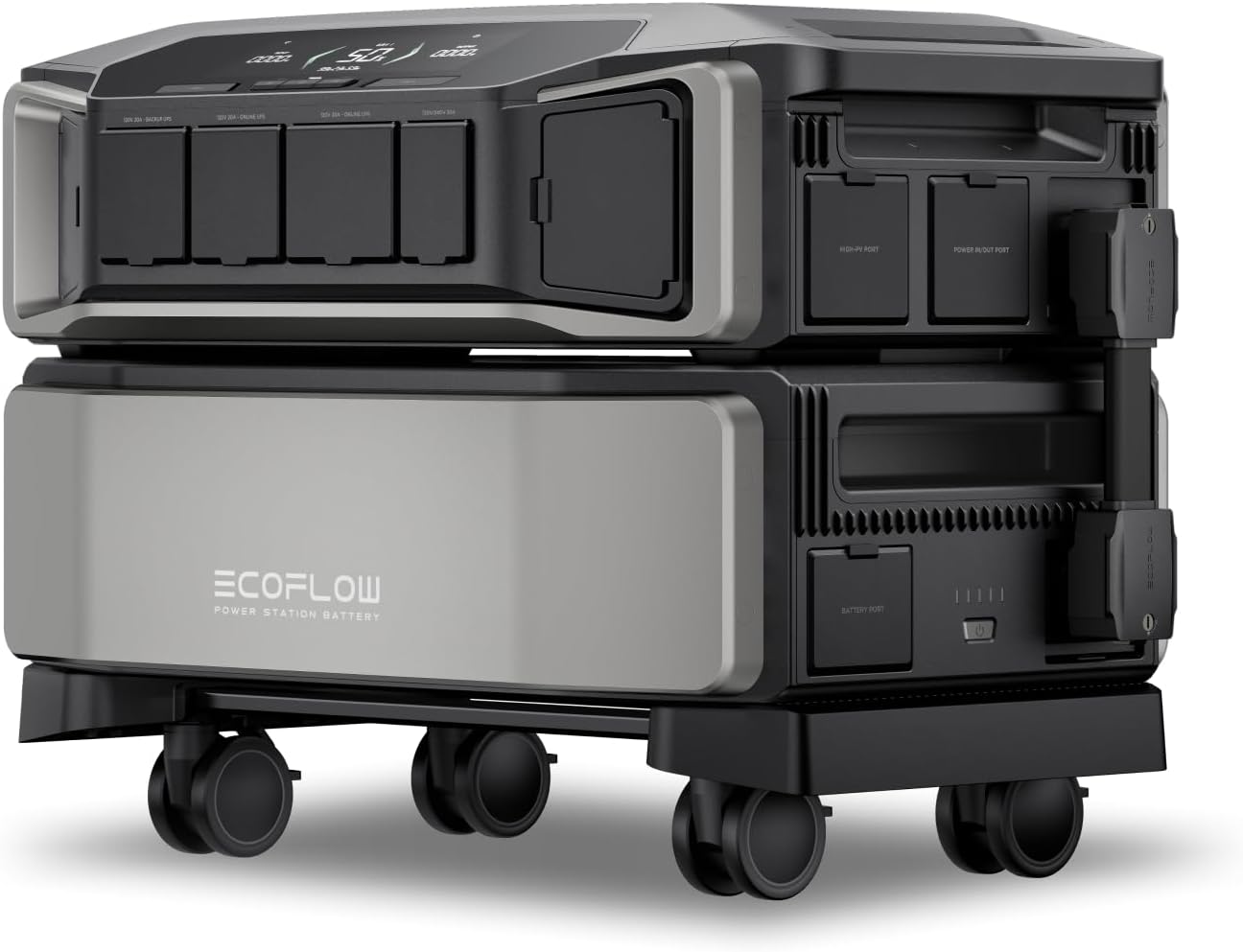
- Advertised
- 6,144 Wh
- Usable, est. 85% inverter
- 5,222 Wh
- Continuous
- 7,200 W
- Surge
- not stated
- Chemistry
- LiFePO4 (LFP)
- Rated cycles
- not stated
- Weight
- 181.8 lb
7,200 W continuous at 120/240 V from one inverter, which on its own nearly matches the 1/2 HP motor's start, and the only unit on this site whose maker states UL 9540 and UL 1973 listings. EcoFlow's US page does not state a surge figure, so the card leaves it not stated; the continuous rating is why it is ranked. 6,144 Wh is close to two days of the pump at a heavy 10% duty, and the system scales to 90 kWh. Weight is inverter plus battery.
Pros
- UL 9540 and UL 1973 stated by the maker
- 7,200 W continuous; scales to 90 kWh
Cons
- Surge rating not stated on the maker's US page
- Top-shelf band; two pieces at 70 and 112 lb
Also worth considering
Well-reviewed units that just missed the ranked list. Worth a look if the picks above are not quite right for you.
- EcoFlow DELTA Pro 3 4,096 Wh, 4,000 W at 120/240 V and UL 9540 stated, but the maker's page gives no surge figure and 4,000 W continuous does not clear a 1/2 HP start on paper; a fit for a 1/3 HP or soft-start pump, confirmed against your motor plate.
Frequently asked questions
What size generator do I need for a 1/2 HP well pump?
One whose starting watts clear the motor's locked-rotor draw. Franklin lists 32.2 A locked rotor at 230 V for its 1/2 HP 2-wire motor, about 7,400 VA, so a generator rated 7,500 starting watts or more, with a 240 V outlet. A 3,500 W inverter generator will not start it however long it can run it.
Can a battery power station run a well pump?
Only a large one with 240 V output and a surge rating above the motor's start. On the makers' stated numbers two single units qualify, the Anker SOLIX F3800 and the EcoFlow DELTA Pro Ultra. A 1/3 HP or soft-start pump lowers the bar; check your motor's plate.
How many watt-hours does a well pump use per day?
Running draw times minutes of use. A 1,150 W pump running 10% of the time averages 115 W, about 2,760 Wh a day at the outlet, or roughly 3,250 Wh of usable battery. Water use, not the pump, sets the number; most households pump far less.
Do I need an electrician to connect backup power to a well pump?
Yes. A well pump is hardwired to a dedicated circuit, so any backup source connects through a transfer switch or inlet installed by a licensed electrician. Nothing on this page is a wiring instruction.