Anker SOLIX F3800 vs EcoFlow DELTA Pro Ultra: the two 240 V portables, one spec sheet each
The two portables that output 240 V from one unit, line by line from their makers' pages: capacity, output, what each states about surge and listings.
These are the two portable systems that put out 240 V from a single unit, which makes them the two a household with a well pump or a central air conditioner is actually choosing between. On the makers’ own pages the F3800 states the surge figure and the DELTA Pro Ultra states the safety listings, and neither states the other. That asymmetry is the whole comparison; the rest is capacity and price.
Line by line, from the two pages
| Figure (makers’ pages, read September 11, 2026) | Anker SOLIX F3800 | EcoFlow DELTA Pro Ultra |
|---|---|---|
| Capacity per unit | 3,840 Wh | 6,144 Wh |
| Usable at 85% inverter efficiency | about 3,260 Wh | about 5,220 Wh |
| Continuous output | 6,000 W, 120/240 V | 7,200 W, 120/240 V |
| Surge, as stated | 9,000 W | not stated |
| Chemistry | LFP | LFP |
| Cycles, as stated | 3,000-plus, basis not stated | 3,500, basis not stated |
| Safety listing stated | none | UL 9540, UL 1973 |
| Solar input | 2,400 W | up to 5,600 W across two inputs |
| Expands to | 53.8 kWh | 90 kWh |
| Weight | 132.3 lb, one piece | 70 lb inverter plus 111.8 lb battery |
| UPS switchover | under 20 ms | automatic, time not stated |
| Warranty | 5 years | 5 years |
The start-up question
Franklin’s 1/2 HP well pump motor starts at about 7,400 VA. The F3800’s stated 9,000 W surge clears it with room; the DELTA Pro Ultra’s 7,200 W continuous nearly matches it on continuous output alone, and its true surge, whatever it is, is not on the page. For a reader whose list includes a pump, the F3800 is the one whose maker has put the number in writing. The well pump page is the full check and the running versus surge guide is the reasoning.
The listing question
UL 9540 is the standard for stationary energy storage systems, the one installed home batteries carry, and EcoFlow states it and UL 1973 for the DELTA Pro Ultra. Anker states nothing for the F3800. For a system that will live in a garage wired to the panel, that is not a minor line, and it is the strongest argument for the Ultra’s band. The LiFePO4 versus NMC guide explains why the chemistry both share is not a listing.
Capacity and what it costs
The Ultra carries 60% more energy per unit and scales to nearly double the F3800’s ceiling, and it sits about two price bands higher for the base system. For the essentials a household actually runs in an outage, roughly 2.5 kWh a day per the home battery backup pillar, either unit is days of runtime; the extra capacity buys the whole-house ambition, not the refrigerator.
Who each is for
- F3800: the household with a well pump or a large motor on the list, that wants the start-up figure in writing, in one box, at the lower band.
- DELTA Pro Ultra: the household planning a permanent, expandable installation that wants the stationary-storage listings stated, and is prepared for two pieces and the top band.
- Either: feeding house circuits at 240 V means a transfer switch installed by a licensed electrician; the transfer switch guide covers what that is. Both are sold with the bundle, and both belong on the expandable roundup alongside the 120 V systems this page leaves out.
How we measure
Every pick is scored on the same five criteria. Every capacity, output and certification figure is read from the manufacturer's current spec sheet at write time and dated on the card, and every runtime is computed from those figures with the arithmetic shown. When a maker does not publish a number, the card says "not stated". We never guess one.
-
Usable capacity
The advertised watt-hours against what reaches the outlet: inverter loss, the depth-of-discharge limit and idle self-consumption. We state usable capacity, not the sticker.
-
Output headroom
Continuous and surge watts against the appliances readers actually plug in. A pump that pulls 3 to 5 times its running watts at start trips an underspecced inverter; we check the surge number first.
-
Chemistry and certification
LiFePO4 versus NMC, the rated cycles to 80%, and whether the unit carries UL 2743, UL 9540 or UL 1973. We print the certification status plainly and never treat an uncertified import as equivalent.
-
Recharge and expansion
Wall recharge time, the solar input ceiling and what it means for real charge time, pass-through or UPS switchover, and whether there is an expansion-battery path.
-
Value and warranty
Price per usable kilowatt-hour, weighted by warranty years. A maker that guarantees its cycle rating in writing is telling you something the spec sheet cannot.
Price bands, relative to the picks on this page: $ budget · $$ mid-range · $$$ premium · $$$$ top shelf. Retailer prices move constantly, so we show bands rather than dollar amounts; each button shows the live price.
The one that states a surge figure
Anker SOLIX F3800
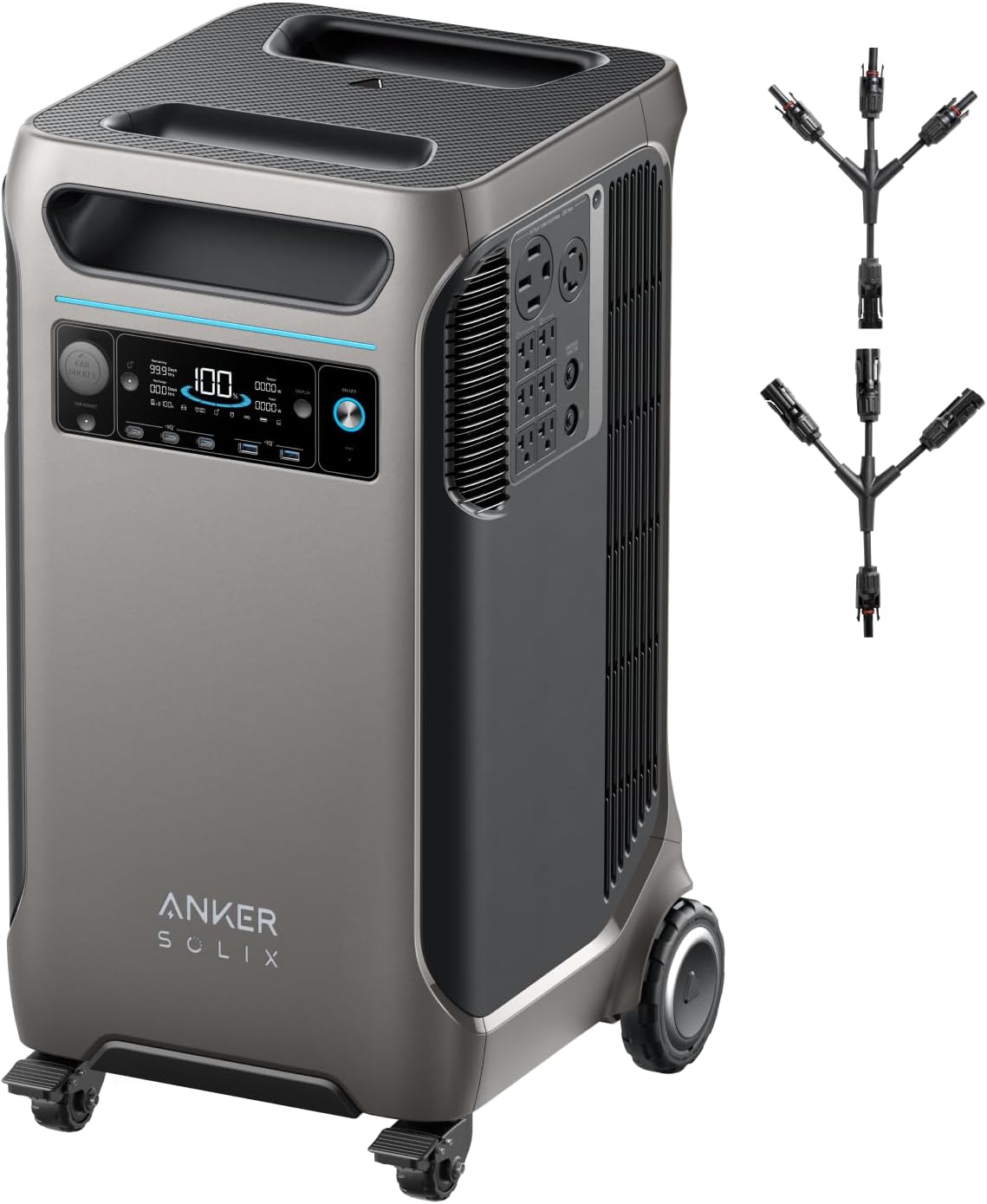
- Advertised
- 3,840 Wh
- Usable, est. 85% inverter
- 3,264 Wh
- Continuous
- 6,000 W
- Surge
- 9,000 W
- Chemistry
- LiFePO4 (LFP)
- Rated cycles
- not stated
- Weight
- 132.3 lb
One box, 132 lb, 3,840 Wh, 6,000 W at 120 or 240 V with a stated 9,000 W surge, 2,400 W of solar input, expandable to 53.8 kWh, sub-20 ms UPS, five-year warranty. Anker's page states 3,000-plus cycles without a capacity basis and no safety listing, and the card leaves both as not stated.
Pros
- Stated 9,000 W surge clears a 1/2 HP well pump start
- One piece; about half the band of the Ultra
Cons
- No safety listing or cycle basis stated on the maker's page
The one with the listings
EcoFlow DELTA Pro Ultra
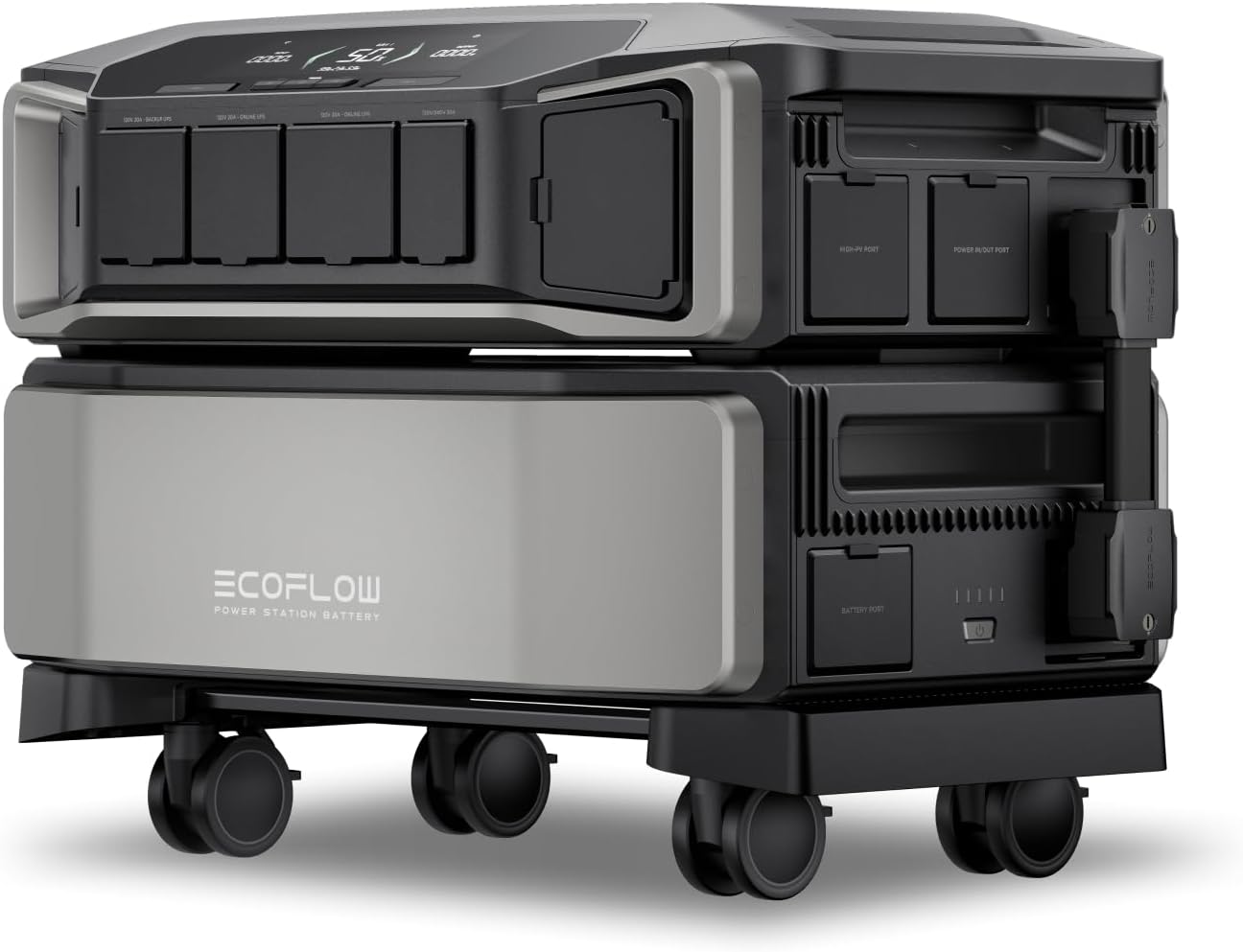
- Advertised
- 6,144 Wh
- Usable, est. 85% inverter
- 5,222 Wh
- Continuous
- 7,200 W
- Surge
- not stated
- Chemistry
- LiFePO4 (LFP)
- Rated cycles
- not stated
- Weight
- 181.8 lb
Two pieces, 70 lb of inverter on 112 lb of battery: 6,144 Wh, 7,200 W at 120 or 240 V, up to 5,600 W of solar across two inputs, scaling to 90 kWh, UL 9540 and UL 1973 stated. EcoFlow's US page states no surge figure and describes 3,500 cycles without a capacity basis, so those cells read not stated.
Pros
- UL 9540 and UL 1973 stated by the maker
- 60% more capacity per unit; scales to 90 kWh
Cons
- Surge rating not stated on the US page
- Top-shelf band; two heavy pieces
Frequently asked questions
Which is better for a well pump, the F3800 or the DELTA Pro Ultra?
On stated numbers, the F3800: Anker states a 9,000 W surge, above a 1/2 HP motor's roughly 7,400 VA start. EcoFlow's US page states 7,200 W continuous and no surge figure for the DELTA Pro Ultra, so it is ranked on continuous output alone.
Which has the safety listing?
The DELTA Pro Ultra. EcoFlow states UL 9540 and UL 1973 on its page; Anker states no listing for the F3800. That is a statement about the pages, and it is the one line where the two are not close.
Which expands further?
The DELTA Pro Ultra, to 90 kWh across multiple inverters and batteries. The F3800 reaches 53.8 kWh. Both are far beyond what a household uses in an outage; the difference matters for whole-home ambitions, not essentials.
Do either of them need an electrician?
To plug appliances in, no. To do what they are built for, feeding the house's circuits at 240 V, yes: a transfer switch or inlet installed and permitted by a licensed electrician. Both are sold with transfer-switch bundles.