Best 1 kWh power station: five units for a day of essentials, ranked on the spec sheet
The 1 kWh class ranked on usable watt-hours, inverter headroom, UPS switchover and the cycle basis each maker actually states, every figure dated.
The 1 kWh class is the entry point for real home backup: enough to keep a refrigerator cold through a night, run a CPAP for two, and charge everything in the house, in a box one person carries. Ranked on usable watt-hours, the inverter’s headroom, how fast it takes over when the grid drops, and the cycle basis each maker actually states. Every figure on the cards was read from the maker’s page on the date shown.
What a kilowatt-hour buys
A 1,024 Wh sticker is about 870 Wh at the outlet after inverter loss, and the usable capacity guide explains the gap. In appliance terms, from the runtime tables on this site: about 16 hours of an average refrigerator, two humidified nights of a CPAP, three hours of a cycling sump pump, and about 35 minutes of a space heater. The class is a night of essentials; the 2 kWh class is a day.
Where the five differ
| Unit | Continuous / surge | Cycles stated | UPS | Weight |
|---|---|---|---|---|
| EcoFlow DELTA 3 | 1,800 / 3,600 W | 4,000 to 80% | under 10 ms | 27.6 lb |
| Anker SOLIX C1000 Gen 2 | 2,000 / 3,000 W | 4,000 to 80% | 10 ms | 24.9 lb |
| BLUETTI AC180 | 1,800 / not stated | basis not stated | 20 ms | 35.3 lb |
| Jackery Explorer 1000 v2 | 1,500 / 3,000 W | 4,000 to 70% | under 20 ms | 23.8 lb |
| EcoFlow DELTA 3 Plus | 1,800 / 3,600 W | 4,000 to 80% | under 10 ms | 27.6 lb |
Inverter. Every unit runs a refrigerator, and the compressor’s start-up spike is well inside every surge rating that is stated. The C1000 Gen 2’s 2,000 W continuous is the most headroom for a microwave or a coffee maker alongside the fridge; the Jackery’s 1,500 W is the least, and it is still 35% above a 1/3 HP sump pump. The running versus surge guide is the reasoning.
UPS. This is the line that decides whether the unit protects a refrigerator with nobody home. All five have a mode; the EcoFlow and Anker units switch in 10 ms or less, the Bluetti and Jackery in about 20. For a refrigerator any of them is fine. For a desktop computer the faster ones are the safer choice.
The cycle basis. Three makers rate to 80%, Jackery rates to 70%, and Bluetti states a count without a basis. The LiFePO4 versus NMC guide explains why the basis changes what the number means, and the cards print it rather than rounding everyone to 80.
What none of them states
No maker in this class states a UL 2743 listing on its product page as of the check date, so every card reads “none stated by the maker.” Look for the mark on the unit; the chemistry is not a listing.
The class in context
The home battery backup pillar puts 1 kWh units in the first row of its class table: fridge, CPAP, phones, nothing with a large motor. That is a lot of households, and it is the honest limit of the class.
How we measure
Every pick is scored on the same five criteria. Every capacity, output and certification figure is read from the manufacturer's current spec sheet at write time and dated on the card, and every runtime is computed from those figures with the arithmetic shown. When a maker does not publish a number, the card says "not stated". We never guess one.
-
Usable capacity
The advertised watt-hours against what reaches the outlet: inverter loss, the depth-of-discharge limit and idle self-consumption. We state usable capacity, not the sticker.
-
Output headroom
Continuous and surge watts against the appliances readers actually plug in. A pump that pulls 3 to 5 times its running watts at start trips an underspecced inverter; we check the surge number first.
-
Chemistry and certification
LiFePO4 versus NMC, the rated cycles to 80%, and whether the unit carries UL 2743, UL 9540 or UL 1973. We print the certification status plainly and never treat an uncertified import as equivalent.
-
Recharge and expansion
Wall recharge time, the solar input ceiling and what it means for real charge time, pass-through or UPS switchover, and whether there is an expansion-battery path.
-
Value and warranty
Price per usable kilowatt-hour, weighted by warranty years. A maker that guarantees its cycle rating in writing is telling you something the spec sheet cannot.
Price bands, relative to the picks on this page: $ budget · $$ mid-range · $$$ premium · $$$$ top shelf. Retailer prices move constantly, so we show bands rather than dollar amounts; each button shows the live price.
Best overall
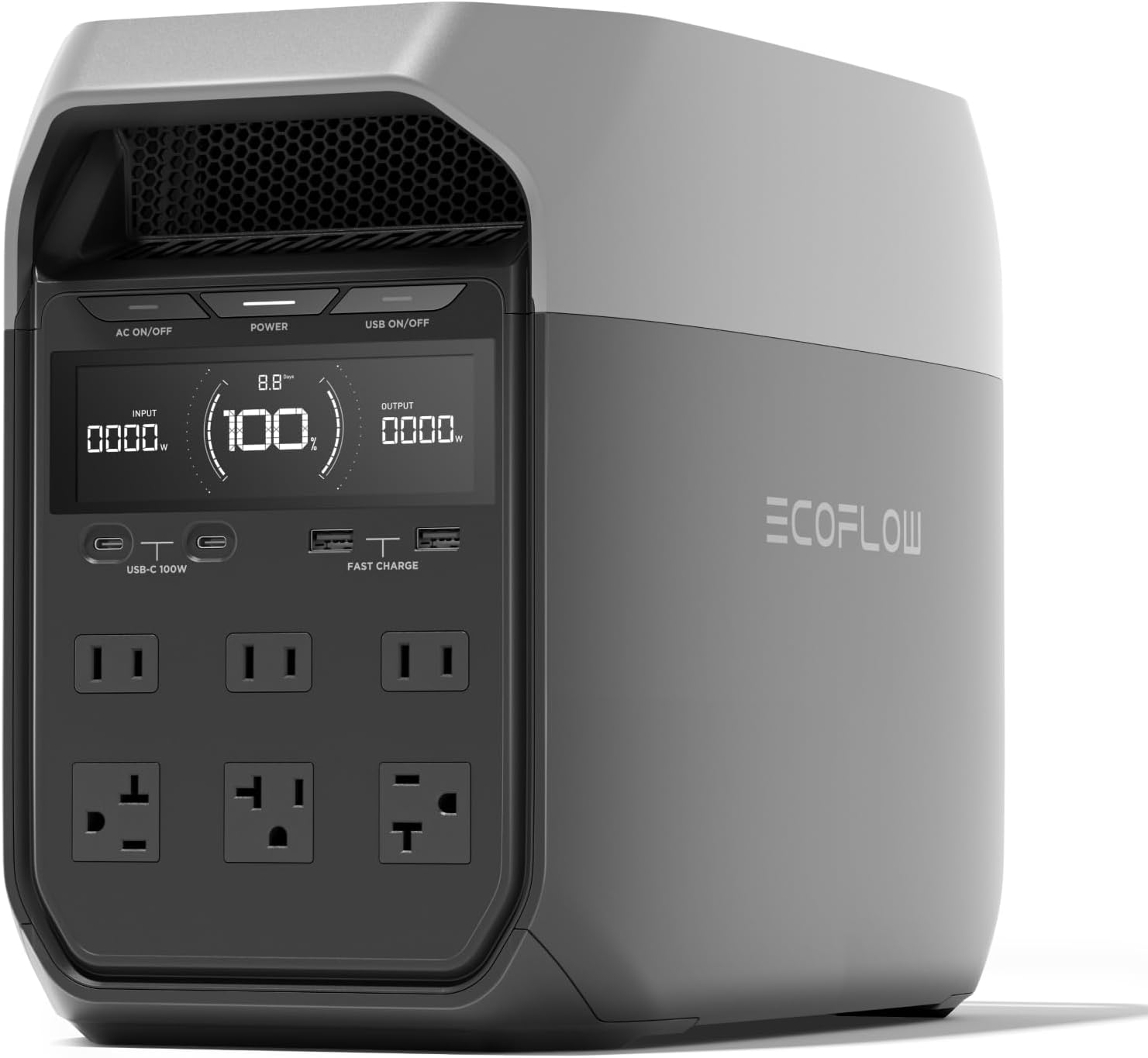
EcoFlow DELTA 3
- Advertised
- 1,024 Wh
- Usable, est. 85% inverter
- 870 Wh
- Continuous
- 1,800 W
- Surge
- 3,600 W
- Chemistry
- LiFePO4 (LFP)
- Rated cycles
- 4,000 to 80%
- Weight
- 27.6 lb
The best-balanced spec sheet in the class: 1,800 W continuous with a 3,600 W surge, 4,000 cycles to 80%, a sub-10 ms UPS, and a 56-minute wall recharge, in a 27.6 lb unit that accepts EcoFlow's extra batteries. Nothing here beats it on more than one line.
Pros
- 3,600 W surge, sub-10 ms UPS, 4,000 cycles to 80%
- Expandable with EcoFlow extra batteries
Cons
- 500 W solar ceiling
- No safety certification stated on the maker's page
Lightest, most inverter
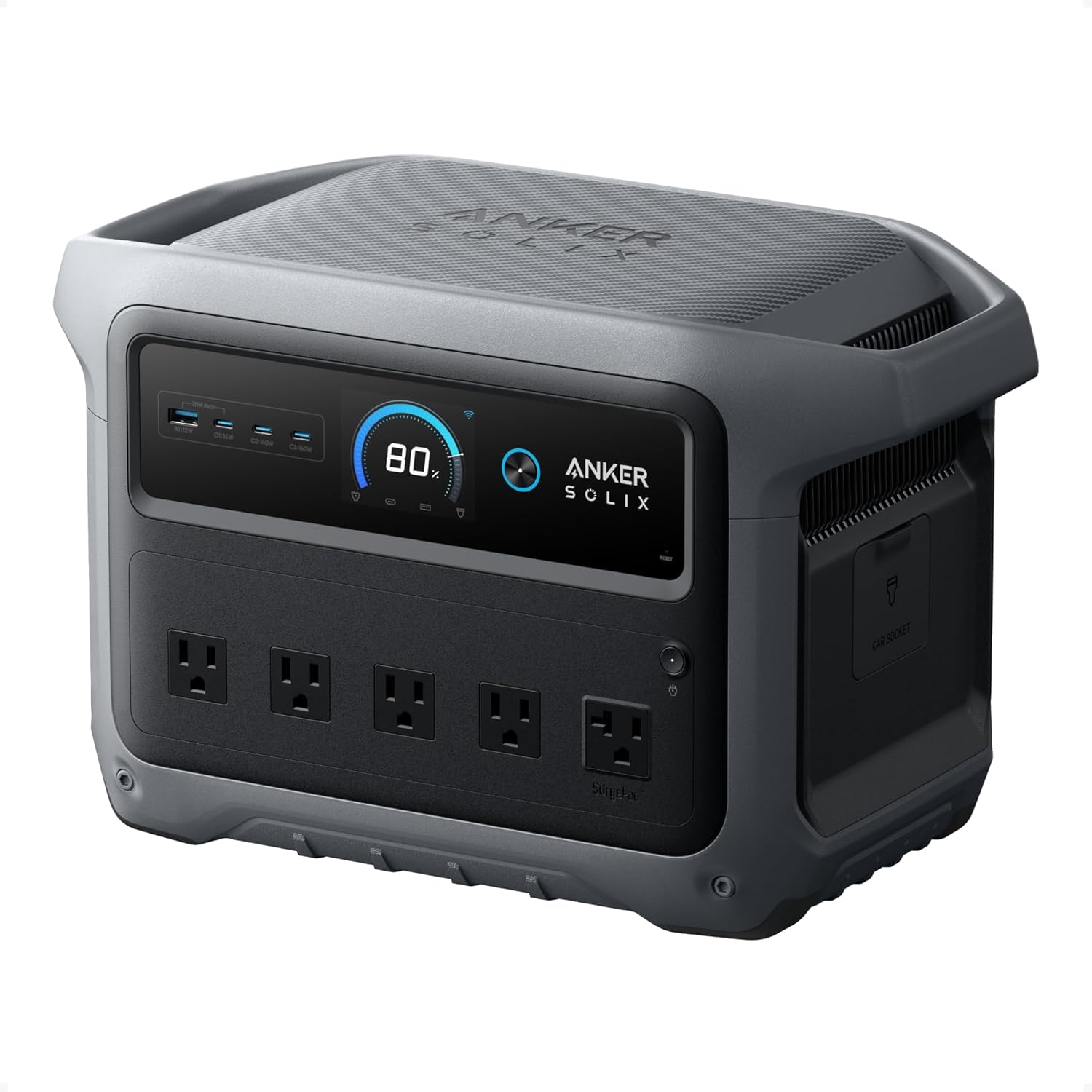
Anker SOLIX C1000 Gen 2
- Advertised
- 1,024 Wh
- Usable, est. 85% inverter
- 870 Wh
- Continuous
- 2,000 W
- Surge
- 3,000 W
- Chemistry
- LiFePO4 (LFP)
- Rated cycles
- 4,000 to 80%
- Weight
- 24.9 lb
A 2,000 W continuous rating, the highest in the class, in the lightest unit at 24.9 lb, with the same 4,000-cycle rating as the DELTA 3 and a 10 ms UPS. The 600 W solar ceiling and the 3,000 W surge are the two lines where the DELTA 3 edges it.
Pros
- 2,000 W continuous in a 25 lb unit
- Full recharge in 49 minutes
Cons
- 600 W solar ceiling
Most watt-hours for the band
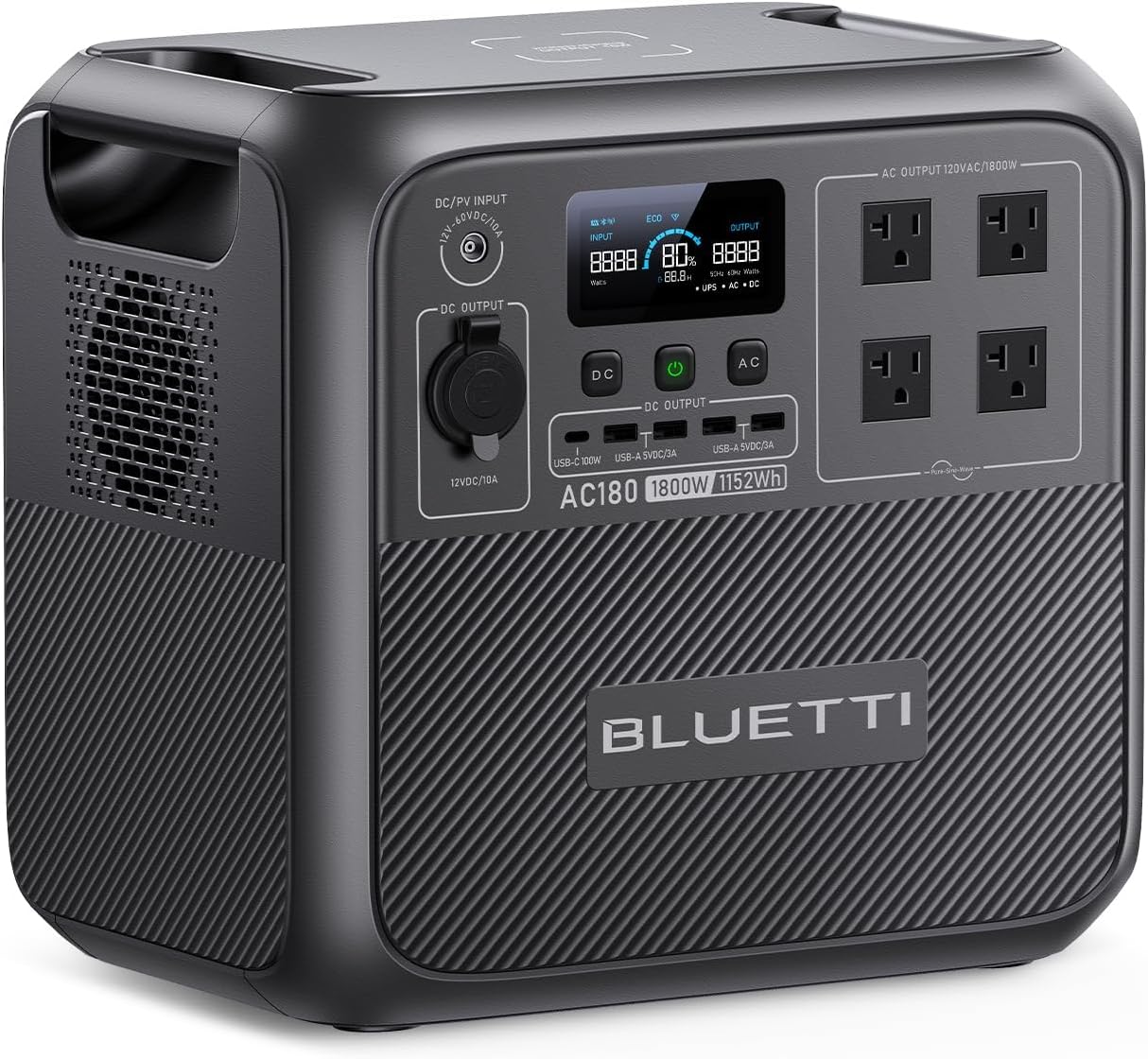
BLUETTI AC180
- Advertised
- 1,152 Wh
- Usable, est. 85% inverter
- 979 Wh
- Continuous
- 1,800 W
- Surge
- not stated
- Chemistry
- LiFePO4
- Rated cycles
- not stated
- Weight
- 35.3 lb
The largest pack in the class, 1,152 Wh, in the budget band, with 1,800 W continuous and a 1,440 W wall input. Bluetti states 3,500-plus cycles without a capacity basis and a 2,700 W Power Lifting figure for heating loads rather than a motor surge rating, so both cells read not stated. The 35 lb weight is the trade.
Pros
- 1,152 Wh in the budget band
- 1,440 W wall input, 20 ms UPS
Cons
- Surge rating and cycle basis not stated by the maker
- Heaviest here at 35.3 lb
Best for CPAP nights
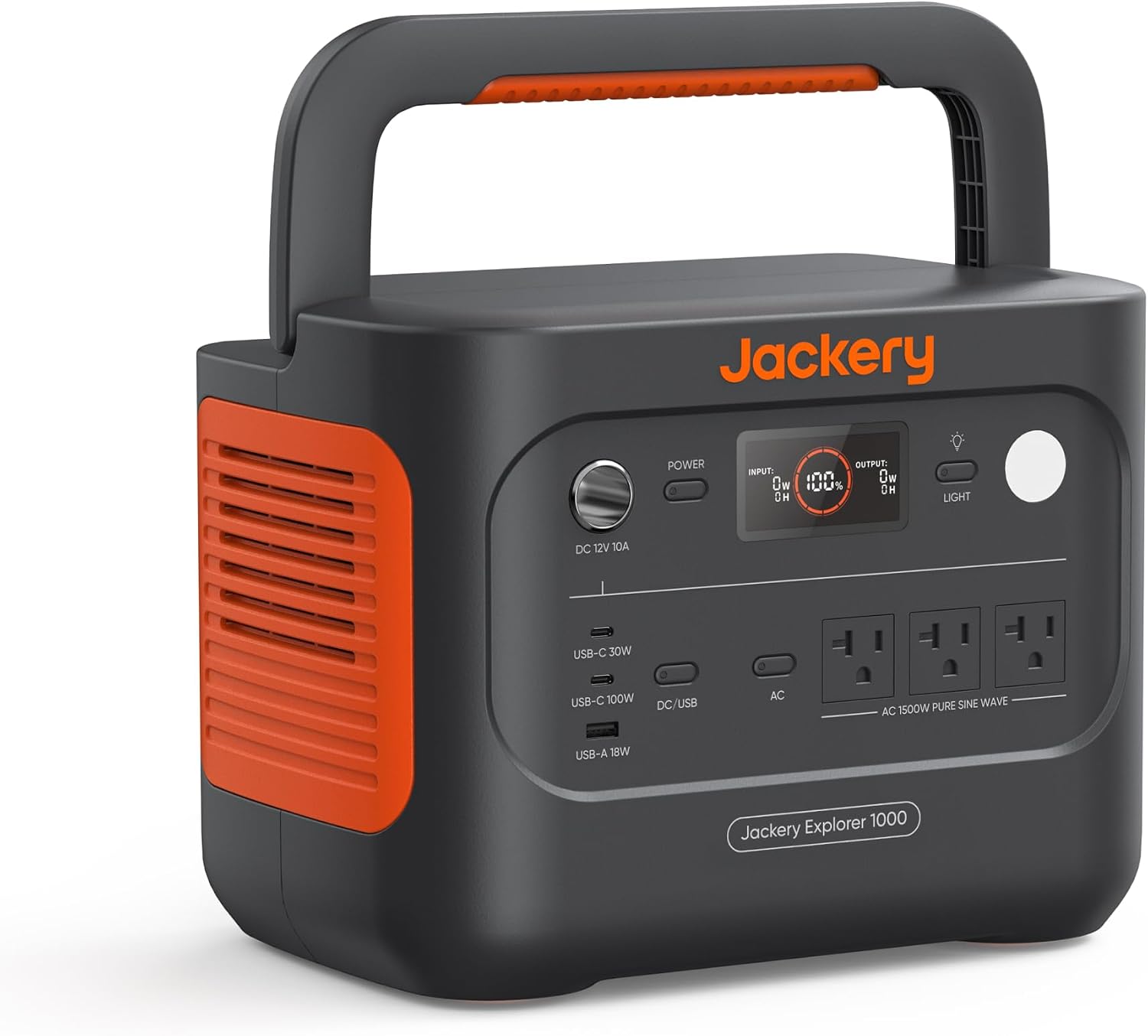
Jackery Explorer 1000 v2
- Advertised
- 1,070 Wh
- Usable, est. 85% inverter
- 910 Wh
- Continuous
- 1,500 W
- Surge
- 3,000 W
- Chemistry
- LiFePO4
- Rated cycles
- 4,000 to 70%
- Weight
- 23.8 lb
The lightest unit here with the most capacity per pound, and the one the CPAP page leads with. The 1,500 W continuous rating is the lowest in the class, fine for a refrigerator and a bedside, thinner margin for a pump. Jackery rates its cycles to 70%, and the card says so.
Pros
- 23.8 lb; 12 V port for a CPAP's DC converter
- Full wall recharge in about an hour
Cons
- 1,500 W continuous, lowest here
- Cycle rating to 70%, not 80%
The DELTA 3 with more expansion
EcoFlow DELTA 3 Plus
- Advertised
- 1,024 Wh
- Usable, est. 85% inverter
- 870 Wh
- Continuous
- 1,800 W
- Surge
- 3,600 W
- Chemistry
- LiFePO4 (LFP)
- Rated cycles
- 4,000 to 80%
- Weight
- 27.6 lb
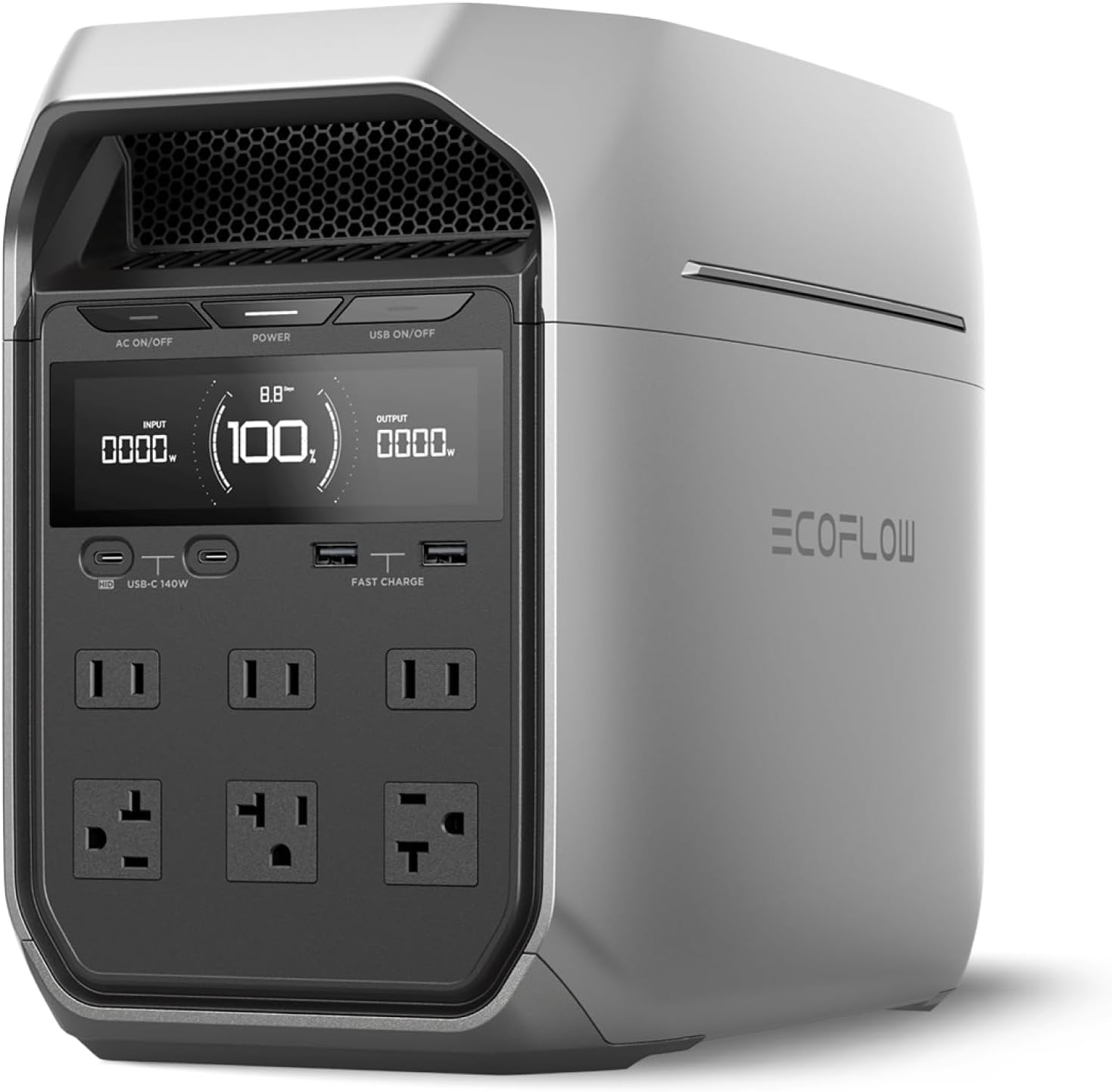
Identical output, pack and weight to the DELTA 3, plus 140 W USB-C and compatibility with four different EcoFlow extra batteries, at a higher band. Buy it when you already own, or plan to own, one of those batteries; otherwise the DELTA 3 is the same unit for less.
Pros
- Widest extra-battery compatibility in the class
Cons
- A band above the DELTA 3 for the same output
Also worth considering
Well-reviewed units that just missed the ranked list. Worth a look if the picks above are not quite right for you.
- Anker SOLIX C1000 (first generation) 1,056 Wh and 1,800 W; the Gen 2 above is lighter with more output, but this one is often a band lower and is still buyable.
Frequently asked questions
What will a 1 kWh power station run?
About 870 Wh at the outlet from a 1,024 Wh sticker. That is roughly 16 hours of an average refrigerator, two humidified nights of a CPAP, or three hours of a cycling sump pump. Not a space heater: about 35 minutes.
Is 1 kWh enough for a power outage?
For a night of essentials, yes. For a full day of refrigerator plus phones plus a CPAP it is close; for a sump pump in a storm it is a bridge, not a night. The 2 kWh class is the honest floor for a day.
Why does the Jackery show cycles to 70% and the others to 80%?
Because that is what each maker states. Jackery rates the Explorer 1000 v2 at 4,000 cycles to 70% of original capacity; EcoFlow and Anker rate to 80%. The two are not the same promise, so the card prints the basis rather than the bare number.
Which of these can run a refrigerator unattended?
All five have a UPS or pass-through mode, from under 10 ms on the EcoFlow and Anker units to 20 ms on the Bluetti. Plugged in between the wall and the refrigerator, the unit takes over when the grid drops without anyone home.